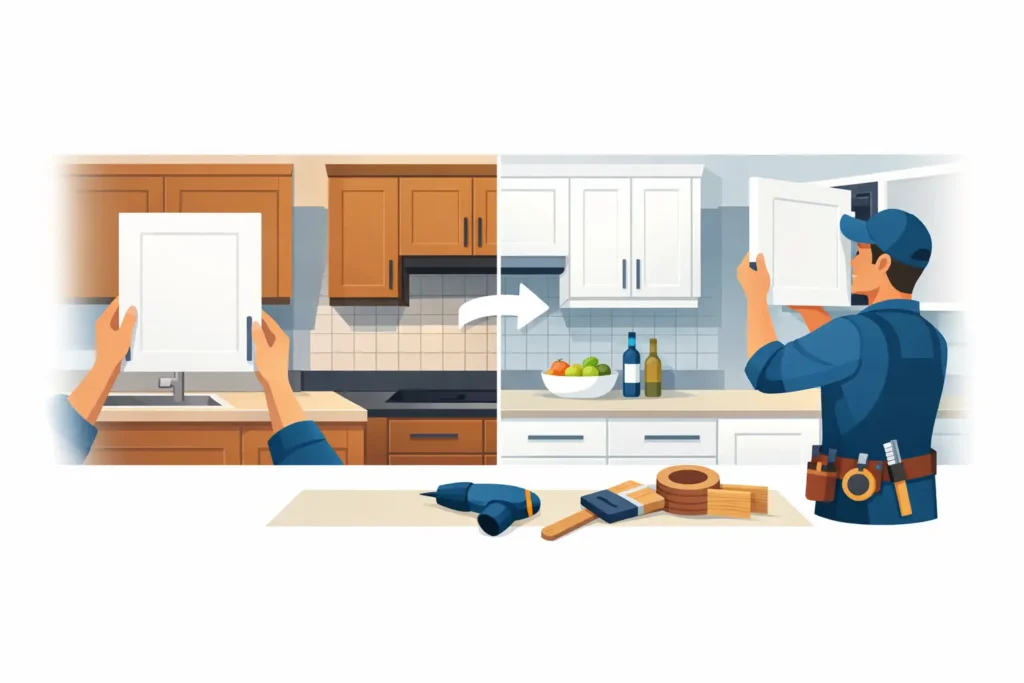
A kitchen can look tired long before it stops working. If your cabinet boxes are still solid but the doors are dated, scratched, or worn, you may be asking, what is kitchen cabinet refacing, and is it a smarter move than full replacement?
Kitchen cabinet refacing is a way to update the visible parts of your cabinets without tearing out the full cabinet structure. Instead of removing the cabinet boxes, the existing framework stays in place while the doors, drawer fronts, hardware, and exterior surfaces are refreshed or replaced. The goal is simple: give the kitchen a cleaner, more current look with less cost, less mess, and far less disruption than a full remodel.
For many homeowners, that balance is exactly the point. You get a noticeable visual upgrade without opening up the larger expense and downtime that come with demolition.
Table of Contents
ToggleWhat is kitchen cabinet refacing and how does it work?
At its core, cabinet refacing keeps what still works and improves what people actually see. The cabinet boxes remain, assuming they are in good shape and properly installed. Then the front-facing components are updated so the entire kitchen looks new.
A typical refacing project often includes new cabinet doors and drawer fronts, new hinges and handles, and a new finish or veneer on the exposed cabinet surfaces. In some cases, the cabinet frames are covered to match the new doors exactly. The finished result is a consistent, refreshed appearance that can make older cabinets look modern again.
This is different from a full cabinet replacement, where everything is removed and rebuilt. It is also different from basic painting alone. Painting can improve color, but refacing usually goes further by changing the look of the doors and drawer fronts themselves.
That distinction matters. If your kitchen feels outdated because of raised-panel oak doors from decades ago, painting alone may not fully change the style. Refacing can.
What is included in cabinet refacing?
The answer depends on the condition of the cabinets and the finish you want, but most projects follow a similar path. First, the existing cabinets are inspected to make sure the boxes are stable, level, and worth keeping. If the cabinet structure is damaged by water, sagging, or poor installation, refacing may not be the right choice.
If the cabinet boxes are sound, the visible exterior is prepared for the new look. Old doors and drawer fronts are removed. The exposed surfaces of the cabinet frames are then refinished or covered so they match the updated style. New doors and drawer fronts are installed, and hardware is added or replaced.
Some homeowners also use the project as a chance to make small functional upgrades, such as soft-close hinges, updated handles, or improved drawer hardware. Those details are not the main reason people choose refacing, but they can make the kitchen feel more complete.
Why homeowners choose refacing over replacement
The biggest reason is value. Full kitchen cabinet replacement can become expensive quickly, especially once removal, disposal, installation, countertop adjustments, and possible plumbing or electrical changes are added to the job. Refacing avoids much of that because the existing cabinet layout stays intact.
Speed is another major advantage. Since there is no full demolition, the project is usually much faster than a complete cabinet renovation. That matters if you use your kitchen every day and do not want a long construction timeline.
There is also the issue of disruption. Replacement often means noise, debris, and a kitchen that feels like a work zone. Refacing is still a project, but it is generally more manageable for homeowners who want visible improvement without turning the house upside down.
Many customers also appreciate the eco-friendly side of refacing. Keeping usable cabinet boxes out of the landfill reduces waste. If the bones of the kitchen are still good, replacing everything can be more than you need.
When kitchen cabinet refacing makes sense
Refacing is a strong option when the cabinet layout already works for your routine. If you like where your sink, appliances, and storage are located, there may be no reason to tear out cabinets just to improve appearance.
It also makes sense when the cabinet boxes are structurally sound but the finish is worn or dated. Scratches, fading, stains, chipped surfaces, and old-fashioned door styles are all common reasons homeowners look into this option.
Refacing is especially practical for homeowners who want a fresh kitchen on a realistic budget. If your goal is to improve appearance, modernize the style, and extend the life of the cabinets, it can deliver a strong return without the cost of a full replacement project.
For service-focused companies like Bath Tub Reglazing Inc, this kind of restoration fits the same logic homeowners already use in bathrooms and kitchens alike: restore what is still usable, improve the finish, and avoid unnecessary replacement.
When refacing may not be the right fit
Refacing is not the answer for every kitchen. If the cabinet boxes are warped, water-damaged, moldy, unstable, or poorly built, covering them up does not solve the real problem. In those cases, replacement is often the better long-term decision.
It may also fall short if you want a completely different kitchen layout. Refacing does not move cabinets, create a larger footprint, or redesign traffic flow. If your kitchen is difficult to use and you need structural changes, a broader remodel may make more sense.
There is also a style limitation to consider. Refacing can transform the look dramatically, but it works within the existing cabinet structure. If you want custom dimensions, added cabinetry, or major changes to storage design, you may need more than a refacing project.
That is why a professional assessment matters. A good provider should tell you honestly whether your cabinets are good candidates or whether replacement would serve you better.
Refacing vs refinishing: what is the difference?
Homeowners often use these terms interchangeably, but they are not exactly the same. Cabinet refinishing usually means keeping the existing doors and drawer fronts and updating their surface through sanding, repair, staining, or painting. It is focused on renewing the finish.
Cabinet refacing usually includes replacing doors and drawer fronts while updating the exposed cabinet surfaces to match. It changes both the finish and the visible style.
If your current doors are in good condition and you like their design, refinishing may be enough. If the style itself feels outdated, refacing often gives you a more dramatic before-and-after result.
How long do refaced cabinets last?
That depends on the materials used, the condition of the original cabinet boxes, and the quality of the installation. When done professionally on solid existing cabinetry, refaced cabinets can last for many years. Daily wear still matters, of course. Kitchens see moisture, grease, frequent handling, and occasional impacts.
The practical question is not whether refaced cabinets last forever. It is whether they provide enough durability and visual improvement to make sense for your home and budget. In many cases, they do.
Professional workmanship plays a big role here. Proper surface preparation, clean alignment, quality hardware, and durable finishes all affect how the cabinets look and perform over time.
What should homeowners expect from the process?
The process usually starts with a consultation and an evaluation of the cabinet condition. From there, the style and finish are selected to match the look you want, whether that means brightening the kitchen with a lighter color or giving it a more updated, modern tone.
Once the project begins, the work is focused on the cabinet exteriors rather than tearing apart the full kitchen. That means less demolition and a quicker path to a visible change. Homeowners often find that the kitchen feels significantly newer without the long timeline of a larger remodel.
It is worth asking detailed questions before hiring anyone. Ask what will be replaced, what will be refinished, what materials will be used, and whether hardware upgrades are included. Clear answers help avoid mismatched expectations.
Is kitchen cabinet refacing worth it?
If your cabinets are solid, your layout works, and your main issue is appearance, cabinet refacing is often worth serious consideration. It offers a practical middle ground between living with an outdated kitchen and paying for a full replacement. You improve what people notice most, keep costs more controlled, and avoid much of the disruption that comes with demolition.
The real value is not just in saving money. It is in getting a kitchen that looks cleaner, fresher, and more current without taking on a bigger project than you actually need. For many homeowners, that is the smartest kind of upgrade.
If you are looking at your kitchen and thinking the cabinets need help, start with the condition of what you already have. Sometimes the best improvement is not replacing everything. It is restoring the parts that still have plenty of life left.