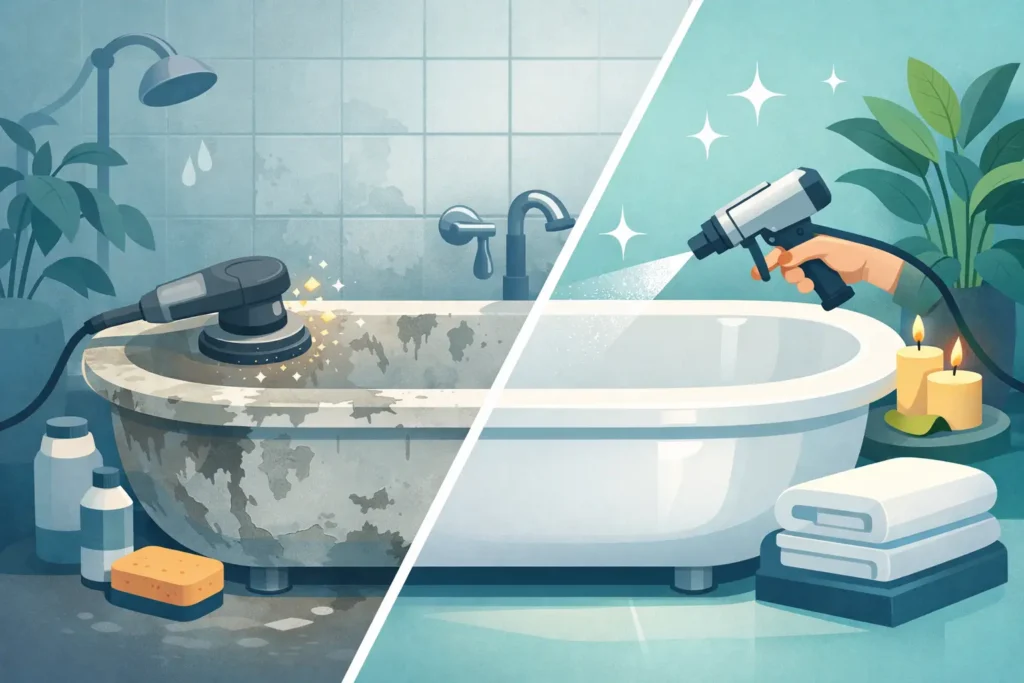
A stained, chipped, or outdated bathtub can make the whole bathroom feel older than it is. Tub refinishing reglazing offers a practical way to restore that surface without tearing out the tub, disrupting the room, or paying for a full replacement.
For many homeowners, that difference matters. Replacing a bathtub often turns into more than a tub project. Tile may need to come out, plumbing may need adjustment, and labor costs can rise fast. Reglazing keeps the existing tub in place and focuses on improving what you already have.
Table of Contents
ToggleWhat tub refinishing reglazing actually means
Tub refinishing reglazing is the process of repairing and recoating the surface of an existing bathtub so it looks clean, smooth, and updated again. It is commonly used on tubs with stains, chips, dull finishes, minor surface damage, or colors that make the bathroom feel dated.
People sometimes use the terms refinishing, resurfacing, and reglazing interchangeably. In everyday use, they point to the same result – restoring the visible finish of the tub rather than replacing the entire fixture.
A professionally refinished tub can look dramatically better in a short amount of time. That is the main reason homeowners choose it. The goal is not a full remodel. The goal is a noticeable upgrade with less cost and less disruption.
Why homeowners choose tub refinishing reglazing
The biggest reason is value. A worn tub stands out, and not in a good way. When the finish is scratched, yellowed, or chipped, even a clean bathroom can feel neglected. Reglazing improves the appearance of the tub without the larger expense of demolition and replacement.
Speed is another major advantage. A full bathtub replacement can stretch into a much bigger project, especially if walls, flooring, or plumbing are affected. In contrast, refinishing is typically much faster and more contained. For busy households, that matters just as much as the price.
There is also the practical benefit of keeping the existing fixture out of the landfill. If the tub is structurally sound, restoring it is often the more efficient choice. Homeowners who want a fresh look without unnecessary waste usually see refinishing as the smarter path.
When refinishing makes sense and when it does not
Refinishing is a strong option when the tub has surface-level problems. That includes cosmetic staining, small chips, worn enamel, discoloration, and a finish that has lost its shine. It can also make sense when the color is simply outdated and the rest of the bathroom is being refreshed.
It is not the right fix for every tub. If the bathtub has major structural cracks, serious rust damage, ongoing leaks, or movement caused by installation issues, refinishing may only cover a deeper problem for a short time. In those cases, replacement or repair work may be the better investment.
This is where a professional evaluation matters. A reliable refinishing company should be clear about what can be restored and what should not be coated over. Homeowners are usually best served by honest guidance, not a one-size-fits-all pitch.
How the tub refinishing reglazing process works
The process starts with surface preparation. This step is a big part of the final result. The tub needs to be thoroughly cleaned to remove soap scum, mineral buildup, body oils, and any residue that could affect adhesion.
After cleaning, chips or minor imperfections are repaired and sanded smooth. The surface is then prepared so the new coating can bond properly. Once that prep work is done, the refinishing coating is applied in controlled layers to create a refreshed finish.
When the job is done well, the tub should look uniform, smooth, and significantly cleaner than before. The finish should not look patchy or rough. It should look like a tub that belongs in the bathroom again.
Homeowners often ask whether this is a do-it-yourself project. Technically, there are DIY kits on the market, but the results can be inconsistent. Surface prep, product quality, ventilation, and application technique all affect the outcome. DIY reglazing may seem cheaper at first, but peeling, uneven texture, or early failure can lead to more cost and frustration later.
What affects cost
Tub refinishing is usually far more affordable than replacement, but the exact cost depends on several factors. The size and condition of the tub matter. A standard tub in decent shape usually requires less repair work than a heavily damaged one.
The type of material can also influence the job. Cast iron, porcelain, fiberglass, and acrylic tubs each present different refinishing conditions. The amount of chip repair, stain removal, and prep work needed can change the price as well.
Color changes and special finish requests may affect cost, too. Some homeowners want a basic bright white refresh, while others are updating the bathroom and want a more custom look. A professional estimate should explain what is included so there are no surprises.
Even with those variables, reglazing is typically the more budget-friendly option when the tub itself is still usable. It avoids many of the hidden costs that come with removal, disposal, plumbing changes, and surrounding surface repairs.
How long a refinished tub lasts
A professionally refinished bathtub can last for years when it is properly maintained. The life of the finish depends on the quality of the prep work, the coating system used, the condition of the original tub, and how the surface is treated afterward.
This is one of those areas where cheaper is not always better. A rushed job or low-grade coating may fail much sooner. On the other hand, professional refinishing with the right products and care can provide a durable, attractive finish that holds up well under normal household use.
Maintenance matters. Harsh abrasive cleaners, suction-cup mats, and rough scrubbing tools can shorten the life of the new finish. Gentle, non-abrasive cleaning habits go a long way toward protecting the surface.
What results you should expect
A refinished tub should look refreshed, cleaner, and more current. It can dramatically improve the visual impression of the bathroom, especially if the old finish was stained or dull. For homeowners preparing to sell, rent, or simply enjoy the space more, that visual improvement can feel significant.
At the same time, expectations should stay realistic. Reglazing restores the surface appearance. It does not change the size of the tub, reconfigure the bathroom layout, or solve structural issues outside the fixture itself. If your goal is a cosmetic upgrade with practical value, it can be an excellent solution. If your goal is a full redesign, refinishing is only one part of that picture.
That trade-off is exactly why refinishing appeals to so many homeowners. It gives you a visible improvement without forcing you into a much larger project.
Choosing the right refinishing company
Not all refinishing work delivers the same result. Experience, preparation standards, product quality, and communication all matter. A reliable company should explain the process clearly, set realistic expectations, and help you understand whether your tub is a good candidate.
It also helps to look for a service provider that focuses on practical outcomes rather than vague promises. Homeowners usually want the same three things: a better-looking tub, minimal disruption, and a fair price. A dependable refinishing specialist should be able to speak directly to those concerns.
Bath Tub Reglazing Inc builds its service around that approach by helping homeowners restore worn surfaces quickly, affordably, and with less disruption than replacement. That kind of clarity matters when you are trusting someone to improve a space you use every day.
Is tub refinishing reglazing worth it?
For many homeowners, yes. If the tub is structurally sound and the main problems are cosmetic, refinishing is often the more sensible choice. It costs less than replacement, takes less time, and can make the bathroom look noticeably cleaner and more updated.
The best candidates are homeowners who want results without turning a bathtub issue into a full renovation. If you are dealing with stains, chips, discoloration, or a finish that has simply seen better days, reglazing can offer a smart middle ground between living with the problem and replacing the fixture entirely.
A bathroom does not always need demolition to look better. Sometimes the right improvement is the one that restores what is already there and makes your home feel cared for again.