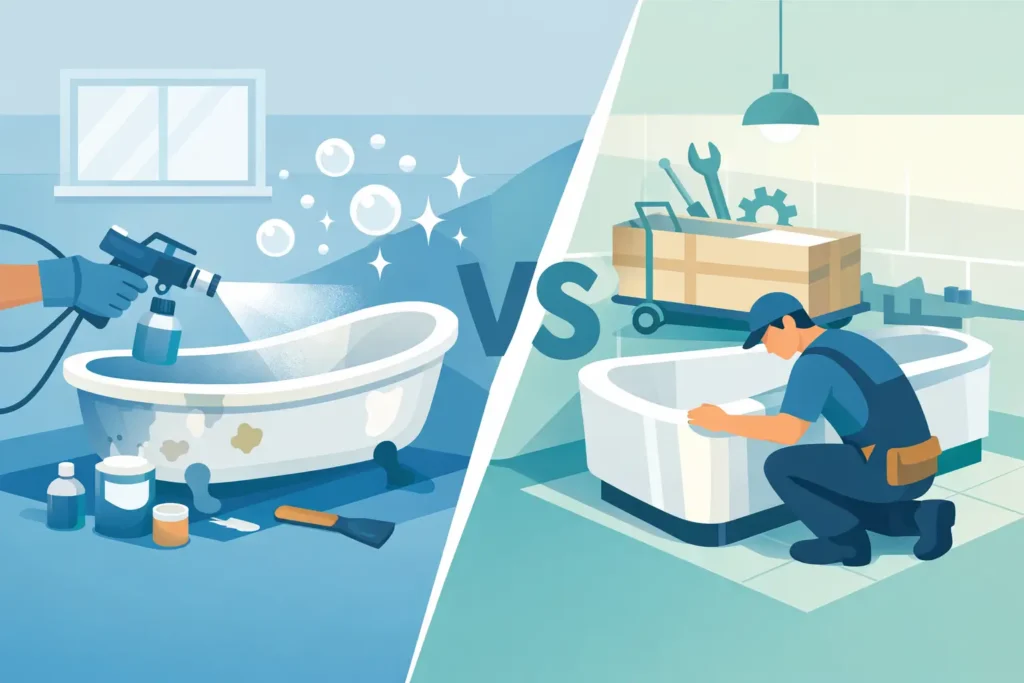
A stained, chipped, or dated tub can make the whole bathroom feel older than it is. When homeowners start weighing bathtub refinishing vs replacement, the real question usually is not just how to fix the tub – it is how to improve the space without overspending, tearing up the bathroom, or turning a simple update into a full renovation.
For many homes, both options can make sense. The better choice depends on the tub’s condition, your budget, your timeline, and how much disruption you are willing to deal with. If you want a cleaner look fast and your existing tub is still structurally sound, refinishing is often the more practical path. If the tub is badly damaged or the layout no longer works, replacement may be worth the larger investment.
Table of Contents
ToggleBathtub refinishing vs replacement: the core difference
Refinishing keeps your current tub in place and restores the visible surface. The process typically addresses stains, chips, dullness, minor cracks, discoloration, and wear, then applies a new finish so the tub looks fresh again.
Replacement removes the existing tub and installs a new one. That sounds straightforward, but in real homes it often involves more than swapping one fixture for another. Demolition, plumbing adjustments, tile work, wall repair, flooring repair, hauling debris, and longer project timelines can all become part of the job.
That difference matters. One option restores what you already have. The other starts over.
When refinishing makes more sense
Refinishing is usually the better fit when the tub looks bad but still functions well. If the problem is cosmetic wear, not structural failure, replacement can be more work and expense than the situation actually requires.
This is why many homeowners choose refinishing when they see rust stains, surface scratches, worn color, soap scum buildup that no longer cleans up well, or chips around the edges. The tub may be ugly, but it is still usable. In that case, restoring the finish can deliver the visual improvement people want without demolition.
Cost is one of the biggest reasons refinishing stands out. A professionally refinished tub generally costs far less than a full replacement project. That matters for families watching renovation budgets, landlords preparing a property for tenants, or homeowners trying to update a bathroom without committing to a complete remodel.
Speed is the other major advantage. Refinishing is typically completed much faster than replacement. Instead of a drawn-out project that can affect the whole room, the work is focused on the existing tub. For busy households, that shorter turnaround is often just as valuable as the savings.
There is also the issue of waste. Keeping the original tub out of the landfill is a more eco-friendly choice when the fixture still has years of useful life left. If your goal is to improve the bathroom responsibly while avoiding unnecessary disposal, refinishing aligns well with that.
When replacement is the better choice
There are times when refinishing is not enough. If the tub has major structural damage, severe rust through the body, ongoing leaks, or installation problems that affect performance, replacement may be the smarter long-term decision.
Replacement also makes sense if you are changing the bathroom layout or upgrading to a different tub style. If you want a larger soaking tub, need a walk-in option for accessibility, or are reworking plumbing locations as part of a bigger remodel, keeping the old tub may no longer fit the project.
In other words, replacement is often driven by function, not just appearance. If the issue goes beyond the surface, starting with a new fixture can prevent repeat problems and allow for a better fit with your renovation plans.
The trade-off is that replacement usually brings more cost, more labor, and more downtime. Even when the tub itself is affordable, the surrounding work often raises the total. Homeowners are sometimes surprised that the fixture is only one piece of the expense.
Cost comparison: where the gap really shows
If you are comparing bathtub refinishing vs replacement strictly on price, refinishing usually wins by a wide margin. A replacement project can include the new tub, demolition, plumbing labor, disposal, finish materials, and repairs to the walls or floor around the tub.
That is why a simple replacement can quickly become a much bigger line item than expected. If older tile cracks during removal or plumbing needs to be updated to meet current conditions, the budget moves up fast.
Refinishing is more contained. You are restoring the existing surface rather than rebuilding the area around it. For homeowners who want a visible bathroom upgrade without opening the door to extra construction costs, that predictability is a strong advantage.
This does not mean refinishing is always the cheapest option no matter what. If a tub is already failing, putting money into the surface alone may only delay a replacement that needs to happen soon anyway. The condition of the tub should drive the decision, not price by itself.
Timeline and disruption
Most people do not think about bathroom downtime until the work begins. That is where the difference between these two options becomes very real.
Refinishing is designed to minimize disruption. There is no need to remove the tub, tear into surrounding materials, or create the kind of dust and debris that usually comes with demolition. For homeowners who want results without turning the bathroom into a construction zone, this is one of the biggest benefits.
Replacement is more invasive by nature. Even in a straightforward project, the old tub has to come out and the new one has to be installed properly. Depending on the room, access can be difficult, especially in older homes or upstairs bathrooms. That often extends the timeline and adds complexity.
If you only have one main bathroom, the practical impact matters. A faster, less disruptive solution can be the deciding factor.
Appearance and finished results
A quality refinishing job can dramatically improve how a tub looks. It can brighten a dingy bathroom, cover years of wear, and make an outdated fixture feel cleaner and more current. For many homeowners, that visual change is enough to make the whole room feel upgraded.
Replacement gives you more freedom in terms of shape, size, and design. If your current tub style feels wrong for the space, refinishing will not change its form. It will improve the finish, not reinvent the fixture.
That distinction is important. If you like the tub you have and just want it to look new again, refinishing is usually the right fit. If you dislike the tub itself, not just the condition of its surface, replacement may better match your goals.
Which option adds more value?
Value depends on what you are trying to achieve. If your goal is to improve appearance quickly and affordably, refinishing often delivers stronger immediate value because the cost is lower and the visual impact is high.
If your goal is a full remodel with long-term layout changes or higher-end fixture upgrades, replacement may support that better. It is a larger investment, but it can make sense when it fits into a broader renovation plan.
For many homeowners, the best value comes from avoiding unnecessary work. A structurally sound tub does not always need to be ripped out just because it looks worn. Restoring what already works can be the most practical improvement you make.
How to decide between bathtub refinishing vs replacement
Start with the condition of the tub. If the damage is mostly surface-level, refinishing is usually worth serious consideration. If the tub has deep structural problems or plumbing issues tied to it, replacement is more likely the right call.
Then look at the bigger picture. Are you simply trying to refresh the bathroom, or are you planning a major remodel? Do you want the room to look better fast, or are you redesigning everything from the floor up? Your answer changes the decision.
Budget and timing should be part of it too. If you want an efficient, affordable update with less disruption, refinishing checks those boxes. That is exactly why many homeowners turn to specialists like Bath Tub Reglazing Inc when they want visible results without the mess and cost of demolition.
A worn tub does not always need to be replaced to make the bathroom feel new again. Sometimes the smartest upgrade is the one that saves your time, protects your budget, and gives you the fresh look you wanted in the first place.