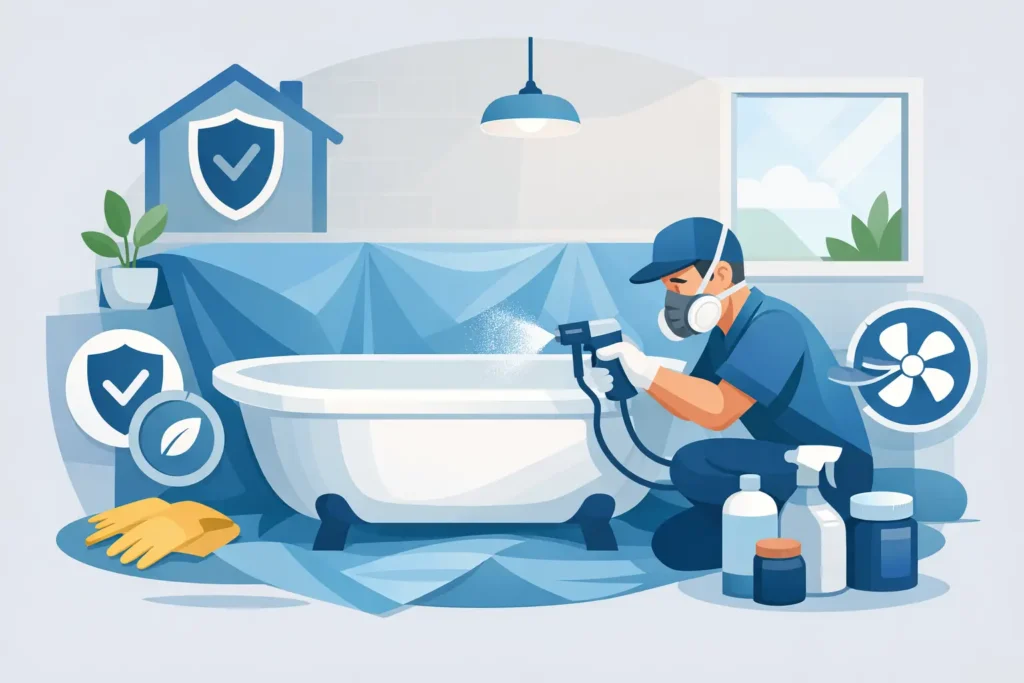
A worn bathtub can make an otherwise clean bathroom feel dated. Stains, chips, dull color, and rough spots often lead homeowners to ask, is bathtub refinishing safe – especially when the alternative is a costly, disruptive replacement.
The practical answer is yes, when the work is completed by trained professionals who use the right preparation, ventilation, protective equipment, and curing procedures. Refinishing does involve professional-grade cleaners, repair materials, and coatings, so it is not a project to treat casually. The safety of the process depends on how the work is performed and how the room is handled afterward.
For homeowners who want a fresh-looking tub without demolition, professional reglazing can be a quick, affordable, and eco-friendly restoration option. Knowing what happens during the process can help you plan with confidence.
Table of Contents
ToggleIs Bathtub Refinishing Safe When Done Professionally?
Professional bathtub refinishing is designed to restore the existing surface rather than remove and replace the entire fixture. A technician cleans the tub, repairs chips or cracks, prepares the surface for adhesion, applies a durable new finish, and allows that coating to cure.
During preparation and application, there can be fumes from cleaning products, bonding agents, or coatings. That is why experienced refinishing professionals use controlled ventilation and personal protective equipment. They also protect nearby floors, walls, fixtures, and access areas from overspray or dust.
The key distinction is between a managed professional process and an uncontrolled one. A qualified technician understands how to prepare the bathroom, contain the work area, ventilate it properly, and provide clear instructions for reentry and use. Those steps reduce unnecessary exposure and help create a finish that performs as it should.
Once the coating has cured according to the product requirements, the bathtub is intended for normal household use. Your refinishing provider should tell you exactly when the room can be used again and when it is safe to run water in the tub.
What Makes the Refinishing Process Safe?
Safety is not one step. It is the result of proper preparation, application, ventilation, and curing. A reliable contractor should treat each part of the project seriously.
Proper ventilation protects the rest of the home
A bathroom is a small, enclosed space, which is why ventilation matters. Professional refinishing crews use ventilation equipment to direct fumes away from the work area during application. Depending on the layout of the home and bathroom, the technician may also seal doorways or use protective barriers to keep the work contained.
Homeowners should avoid entering the bathroom while work is underway. Keeping doors closed, following the technician’s directions, and allowing the recommended ventilation time protects both the household and the quality of the new finish.
Surface preparation should be controlled
The old bathtub surface must be cleaned and prepared so the new coating adheres properly. Skipping this work can lead to peeling, rough texture, or early failure. It can also create avoidable dust and mess.
A professional crew uses methods suited to the tub material and condition. They repair damage before coating rather than simply covering it. This attention to preparation is not just about appearance. It helps the new surface last longer, reducing the need for premature repairs or another restoration project.
Curing time is part of the safety process
A tub may look finished soon after the final coat is applied, but it still needs time to cure. Curing allows the coating to harden and settle into a durable surface. Using the tub too early can mark the finish, reduce durability, or create a surface that does not perform as intended.
Cure times vary by the coating system, humidity, temperature, and bathroom conditions. Many projects allow for use within a day or two, but homeowners should always follow the specific timeline provided by their refinishing professional. Do not assume that a dry-looking tub is ready for baths, showers, bath mats, or cleaning products.
When Should You Take Extra Precautions?
Every household is different. If someone in the home has asthma, chemical sensitivities, respiratory conditions, or concerns related to pregnancy, let the refinishing company know before scheduling. The contractor can explain the products and procedures being used and help you plan for the project day.
In many cases, the simplest approach is to keep sensitive household members, children, and pets away from the work area until ventilation and curing instructions have been met. If your home has only one bathroom, discuss access and scheduling before the appointment. A little planning can prevent inconvenience and help the project move smoothly.
It is also wise to remove towels, toiletries, medicine, toothbrushes, and personal items from the bathroom before work begins. Clear counters and cabinets near the tub if requested. This protects your belongings and gives the technician room to complete a clean, efficient restoration.
Is DIY Bathtub Refinishing Safe?
DIY bathtub refinishing kits may seem like a lower-cost shortcut, but they come with more risk. The materials can be difficult to apply evenly, and many homeowners do not have professional ventilation equipment or experience handling coating products in a small bathroom.
A poor DIY application can create strong odors, uneven coverage, drips, peeling, or a finish that fails quickly. If the coating does not bond correctly, the tub may need to be stripped or repaired before it can be refinished again. That can turn a money-saving project into an added expense.
DIY refinishing is also harder to manage in homes with limited airflow, shared bathrooms, nearby bedrooms, or children and pets. Professional service provides a more controlled process, better preparation, and a clearer path to a durable result.
Questions to Ask Before You Book
You do not need to become a coating expert before refinishing your tub. You do need a service provider that communicates clearly. Before the appointment, ask how the bathroom will be ventilated, how long the tub must cure, and what your household should do during and after the work.
You can also ask what preparation is required from you, whether the technician will repair chips or cracks, and how to care for the new finish. Straightforward answers are a good sign that the company has a defined process and values your home.
A professional should never rush you into using the bathtub before it is ready. They should provide practical aftercare guidance, such as avoiding abrasive cleaners, harsh chemicals, suction-cup mats, and items that can scratch or damage the new coating.
The Safety and Value of Restoration
Replacing a bathtub can involve demolition, plumbing adjustments, tile repair, hauling debris, and days or weeks of disruption. Refinishing keeps the existing fixture in place, which can reduce waste and avoid much of the mess associated with a full bathroom renovation.
That does not mean refinishing is the right choice for every tub. A fixture with severe structural damage, major rust-through, extensive movement, or plumbing problems may need a larger repair or replacement. But for many stained, chipped, faded, or outdated tubs that are still structurally sound, refinishing is a practical way to restore beauty without taking on a full remodel.
Bath Tub Reglazing Inc approaches refinishing as a controlled restoration service: prepare the surface correctly, apply a quality finish, and give homeowners clear instructions for protecting the result. When the process is handled professionally, you can update a tired bathtub with less cost, less disruption, and far less waste than replacement.
A restored tub should make your bathroom easier to enjoy, not add another worry to your renovation list. Choose a qualified refinishing professional, follow the preparation and curing instructions, and give your existing bathtub the chance to look clean, modern, and ready for years of use.