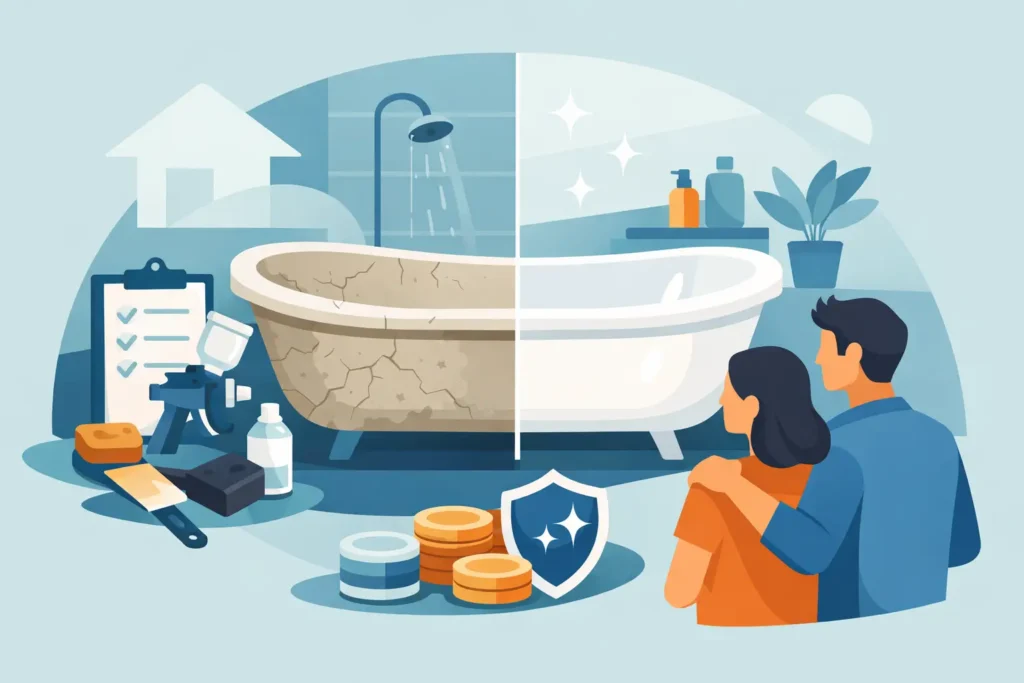
A bathtub can make an otherwise clean bathroom feel tired. Permanent-looking stains, chips around the drain, faded color, and a dull surface often lead homeowners to assume replacement is the only answer. This homeowner guide to tub resurfacing explains when refinishing is a practical solution, what the process involves, and how to get the most value from a restored tub.
For many homeowners, resurfacing offers the visible improvement they want without removing tile, opening walls, or paying for a full bathroom renovation. It is a fast, affordable, and eco-friendly way to restore a tub that is structurally sound but cosmetically worn.
Table of Contents
ToggleWhat Tub Resurfacing Actually Does
Tub resurfacing, also called reglazing or refinishing, renews the visible finish of an existing bathtub. A trained refinishing professional prepares the surface, repairs minor damage, and applies a new durable coating designed for bathroom use. The result is a smooth, refreshed finish that can make an older tub look dramatically cleaner and more current.
This service works especially well for porcelain, fiberglass, acrylic, and cast-iron tubs with surface-level issues. Common reasons homeowners choose resurfacing include stubborn discoloration, scratches, small chips, rust stains, worn enamel, and an outdated color that no longer fits the bathroom.
Resurfacing does not change the size, layout, or plumbing of the tub. That is part of its value. You keep the fixture that already fits your bathroom while improving how it looks and feels to use.
When Resurfacing Makes More Sense Than Replacement
A replacement project can quickly become larger than expected. Removing a tub may require demolition, plumbing adjustments, tile repair, flooring work, and wall restoration. Even a reasonably priced new tub can lead to a much higher total project cost once labor and surrounding repairs are included.
Resurfacing is often the better choice when the tub is stable, free from major structural damage, and still comfortable for your household. It is particularly useful in older homes where the original cast-iron tub is heavy, well-built, and difficult to remove without disturbing surrounding finishes.
Replacement may be the smarter path if the tub has serious cracks, extensive corrosion, water damage beneath it, recurring leaks, or an unstable base. A refinished coating can improve a worn surface, but it cannot correct a plumbing problem or repair a fixture that has failed structurally. An honest evaluation should consider both the visible condition and the condition of the tub underneath.
A Homeowner Guide to Tub Resurfacing: The Process
Professional tub resurfacing is not simply painting a bathtub. The final appearance and durability depend heavily on careful preparation, clean working conditions, and the quality of the coating system.
First, the technician cleans the tub and removes buildup such as soap residue, mineral deposits, oils, and old caulk where needed. The surface is then prepared so the new finish can bond properly. Small chips, pits, and minor imperfections may be repaired during this stage.
Next, the bathroom is protected from overspray. Professional refinishing involves ventilation and masking surrounding surfaces, including tile, floors, fixtures, and cabinetry. The coating is then applied in controlled layers to create an even, glossy finish.
The tub needs time to cure before it can be used. The exact timeline depends on the materials and conditions, but homeowners should follow the technician’s instructions closely. Using the tub too early can damage a finish before it has fully hardened.
A professional job is designed to minimize disruption. In many cases, resurfacing can be completed much faster than a replacement project, allowing homeowners to refresh a bathroom without having it out of service for an extended renovation.
Choosing the Right Color and Finish
White remains a popular choice because it makes a bathroom look brighter, cleaner, and easier to coordinate with changing decor. It can also help an older bathroom feel less dated without replacing the vanity, tile, or flooring.
That said, color selection depends on the room. If the bathroom has warm tile or a cream-colored toilet and sink, a bright white tub may not always be the best visual match. A professional consultation can help you choose a finish that complements the existing fixtures rather than drawing attention to differences between surfaces.
Gloss level matters, too. A smooth, glossy finish is commonly preferred because it reflects light and is easier to wipe clean. The goal is not to make an old tub look artificially new. It is to create a clean, consistent finish that improves the entire room.
What Affects the Cost of Tub Resurfacing
The condition of the tub is one of the biggest cost factors. A tub with a few small chips and surface stains requires less repair than one with multiple damaged areas, heavy rust, or a failed previous coating. Accessibility, the type of material, and the amount of prep work also affect the final price.
Color changes can add complexity, especially when the existing tub is a dark or highly saturated shade. The surrounding area also matters. If the tub is enclosed by delicate tile or the bathroom has limited ventilation and tight working space, preparation may take longer.
Even with these variables, resurfacing is generally far more affordable than a full tub replacement because it avoids demolition and reduces the need for related repairs. It also helps homeowners invest their renovation budget where it has the most impact, such as updated lighting, a new vanity, or refreshed cabinet finishes.
How Long Does a Resurfaced Tub Last?
A professionally resurfaced tub can provide years of service when it is cared for properly. Its lifespan depends on daily use, cleaning habits, the condition of the original tub, and the quality of the preparation and application.
Families who use the tub frequently should be realistic about wear. A resurfaced finish is durable, but it is not maintenance-free. Treating it carefully will protect the surface and help it keep its shine longer.
Avoid harsh powders, abrasive pads, and aggressive chemical cleaners. These products can dull or scratch the coating over time. Instead, use a soft sponge or cloth with a non-abrasive cleaner recommended for refinished surfaces.
It is also wise to avoid leaving bath mats with suction cups in place for long periods. Moisture can become trapped underneath them, which may affect the finish. If a non-slip mat is necessary, remove it after bathing and let the tub dry completely.
Simple Care That Protects the Finish
Good maintenance takes only a few minutes. Rinse the tub after use, wipe away soap residue, and address dripping faucets promptly. Constant water exposure from a leak can create stains and wear in one area over time.
Do not use the tub as a work surface for paint cans, tools, or heavy containers. Dropping a hard object can chip any bathtub finish, including a newly refinished one. If a small chip does occur, have it addressed early before moisture reaches the underlying material.
Keep the bathroom ventilated during and after showers. Lower humidity helps reduce mildew and makes cleaning easier. These small habits protect both the tub and the overall condition of the bathroom.
Questions to Ask Before Booking
Before choosing a refinishing service, ask about the preparation process, ventilation, curing time, and care instructions. A clear explanation of what happens before, during, and after the appointment is a good sign that the company values lasting results.
You should also ask whether minor chips or rust areas will be repaired, what finish options are available, and how the surrounding bathroom surfaces will be protected. Viewing before-and-after examples can help set realistic expectations, especially if your tub has significant staining or prior damage.
The lowest quote is not always the best value. Thorough surface preparation and professional application are what help a resurfaced tub look smooth, clean, and consistent. A rushed job may cost less upfront but can lead to peeling, uneven coverage, or the need for another repair sooner than expected.
A worn bathtub does not have to force a full remodel. When the fixture is structurally sound, professional refinishing can restore beauty to your bathroom with less cost, less waste, and far less disruption. Bath Tub Reglazing Inc can help homeowners assess whether resurfacing is the practical next step for a bathroom that needs a visible, affordable refresh.