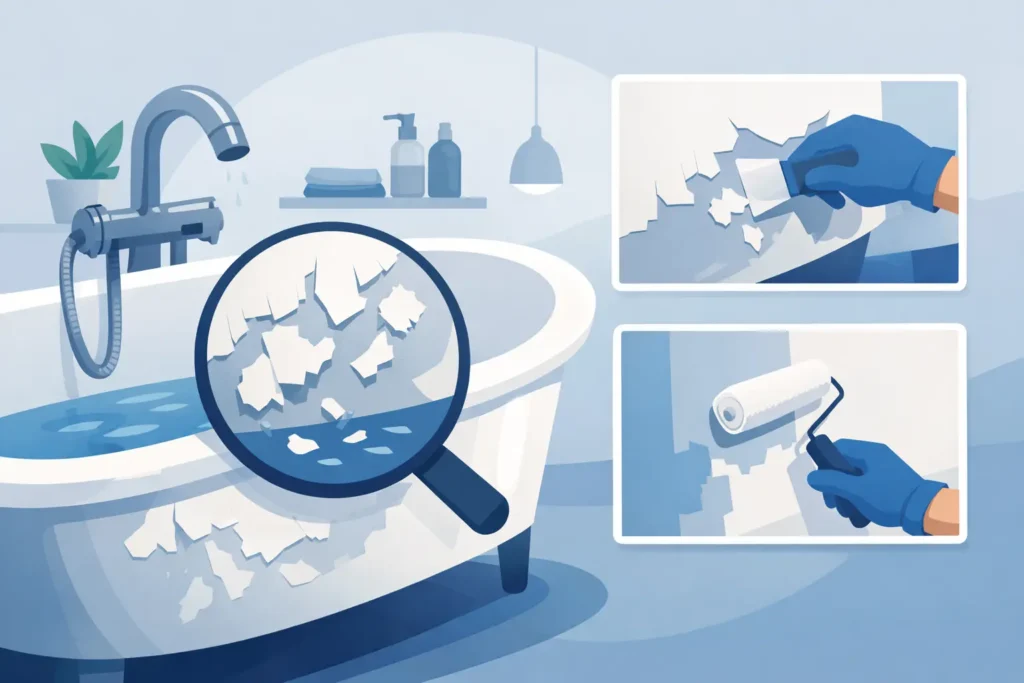
A bathtub can look clean one week and start showing flakes, bubbles, or thin peeling spots the next. If you are asking, why is bathtub paint peeling, the problem usually is not just age. Peeling happens when the coating loses its bond with the tub surface, often because of moisture, surface damage, cleaning products, or an earlier refinishing job that was not properly prepared.
The good news is that peeling paint does not always mean you need a new bathtub. In many cases, professional refinishing can restore the surface without the cost, demolition, and disruption of replacement. The right solution depends on what caused the failure and how far it has spread.
Table of Contents
ToggleWhy Is Bathtub Paint Peeling in the First Place?
Bathtubs are exposed to a difficult combination of water, soap residue, body oils, cleaners, and daily wear. A refinished coating is designed to handle normal use, but it needs a clean, stable surface beneath it. When that foundation is compromised, the finish can begin to lift.
The tub was not prepared correctly before refinishing
Preparation is the most common cause of a peeling bathtub finish. Before a tub is reglazed, the old surface must be thoroughly cleaned, repaired, and properly etched or sanded so the new coating can adhere.
If soap scum, silicone residue, wax, oils, mineral deposits, or traces of cleaning products remain on the surface, the new finish may bond to that residue instead of the tub itself. It can look smooth and glossy at first, then peel after weeks or months of use.
This is why a quick paint-over is rarely a lasting repair. Professional refinishing involves detailed surface preparation, not simply applying a new color over an old finish.
Moisture got beneath the coating
Water can work its way under a bathtub coating through a chip, scratch, failing caulk line, or crack around the drain. Once moisture reaches the edge of the finish, it can weaken adhesion and cause the coating to bubble or peel outward.
Peeling near the drain, overflow plate, tub edges, or along the wall joint often points to a moisture issue. If the caulk around the tub has separated or is missing, water may be getting behind the finish every time the shower is used.
A new coating will not solve that problem unless the source of water intrusion is addressed first. Recaulking, correcting leaks, and repairing damaged areas are part of a proper restoration plan.
Harsh cleaners wore down the surface
A reglazed bathtub needs gentler care than an original porcelain or enamel surface. Abrasive powders, scouring pads, rough sponges, bleach-heavy products, and strong chemical cleaners can dull the coating and gradually wear through it.
Once the finish is scratched or weakened, water and soap can get into those small openings. The surface may start to look cloudy before it begins to lift. In other cases, the damage is more obvious, with thin flakes around the drain or on the bottom of the tub.
For regular cleaning, use a non-abrasive liquid cleaner and a soft sponge or cloth. Avoid leaving bottles, wet washcloths, bath mats, or cleaning products sitting on the tub surface for long periods. These habits help protect both professionally refinished tubs and many factory-finished fixtures.
A bath mat or suction cups pulled at the finish
Rubber bath mats with suction cups are a frequent source of damage on refinished bathtubs. The suction cups create repeated pressure against the coating, while trapped water stays underneath. Over time, that combination can pull up small sections of the finish.
Adhesive strips, non-slip stickers, and stick-on accessories can create similar problems. If safety is a concern, ask a refinishing professional about coating options or non-slip solutions designed for a reglazed surface rather than attaching products directly to it.
The coating has reached the end of its service life
Even a well-done refinishing job does not last forever. Daily use, cleaning habits, water quality, and ventilation all affect how long a surface stays in good condition. A tub that was refinished many years ago may simply be ready for restoration again.
This is especially common in older homes, rental properties, and bathrooms where the tub has been repaired more than once. The key question is whether the existing surface is still stable enough for a targeted repair or whether it needs to be stripped and professionally refinished.
What Peeling Patterns Can Tell You
The location of the peeling can offer useful clues. Small chips or scratches on the tub floor may result from dropped objects, abrasive cleaning, or a bath mat. Peeling around the drain, overflow, or tub edges is more likely connected to water exposure, failed caulk, or a leaking fixture.
Large sheets of coating lifting away usually suggest a bonding failure. This often happens when the previous coating was applied over contamination, an unstable old finish, or inadequate surface preparation. In that situation, touching up the visible area may hide the issue briefly, but it may not stop the surrounding finish from lifting later.
Bubbles under the paint are another warning sign. They can indicate trapped moisture, poor adhesion, or a reaction between incompatible coatings. Do not puncture or scrape at bubbles aggressively. That can turn a small repair into a larger exposed area.
Can You Repair Peeling Bathtub Paint Yourself?
A small, isolated chip can sometimes be repaired with a bathtub touch-up kit. This may be a reasonable short-term option if the surrounding finish is solid, the damage is limited, and there is no leak or moisture problem behind it.
However, DIY touch-ups have limits. Matching the existing color and sheen can be difficult, and store-bought repair products may not bond well to a failing coating. If the tub is peeling in several areas, has broad lifting edges, or feels rough and uneven, a spot repair is unlikely to provide the clean, durable result most homeowners want.
Avoid painting over peeling sections without removing loose material and identifying the cause. Adding another layer over an unstable surface can make the eventual repair more complicated. It may also leave you with a finish that starts peeling again soon after the work is done.
When Professional Reglazing Is the Better Fix
Professional reglazing is often the practical choice when a tub has widespread peeling, dullness, discoloration, chips, or an outdated color. Instead of replacing the fixture, the existing tub is restored through careful cleaning, repairs, surface preparation, and application of a new durable coating.
The result is a refreshed bathtub without tearing out tile, changing plumbing, or managing a full bathroom renovation. For homeowners who want visible improvement on a sensible budget, refinishing can be faster and more affordable than replacement.
A professional can also determine whether the tub itself is a good candidate. Most porcelain, enamel, fiberglass, acrylic, and cast-iron tubs can often be refinished, but the condition of the fixture matters. Severe structural cracks, extensive rust damage, or an ongoing plumbing leak may need separate repairs before refinishing can move forward.
Bath Tub Reglazing Inc helps homeowners evaluate worn and peeling bathtub surfaces and choose a restoration approach that fits the condition of the fixture. The goal is not to cover up a problem. It is to create a clean, updated finish that makes the bathroom feel renewed without unnecessary demolition.
How to Protect a Newly Refinished Bathtub
Once a bathtub has been professionally refinished, consistent care can help extend the life of the new surface. Wait for the recommended curing period before using the tub, because early use can affect the coating before it fully hardens.
After that, clean the tub regularly with non-abrasive products, rinse away soap residue, and dry standing water when practical. Keep drain and faucet leaks under control, replace failing caulk promptly, and avoid suction-cup mats, abrasive scrubbers, and harsh chemicals.
It also helps to use the tub as intended. Do not place heavy tools, sharp objects, or portable metal fixtures directly on the surface. Small habits make a meaningful difference because refinished coatings are protective finishes, not a surface meant for heavy abrasion.
A peeling bathtub finish is frustrating, but it does not automatically mean a full replacement is ahead. Start by looking at where the peeling began, whether moisture is involved, and how much of the coating has lifted. A careful assessment can point you toward a repair that restores the look of your bathroom while protecting your time, budget, and existing fixture.