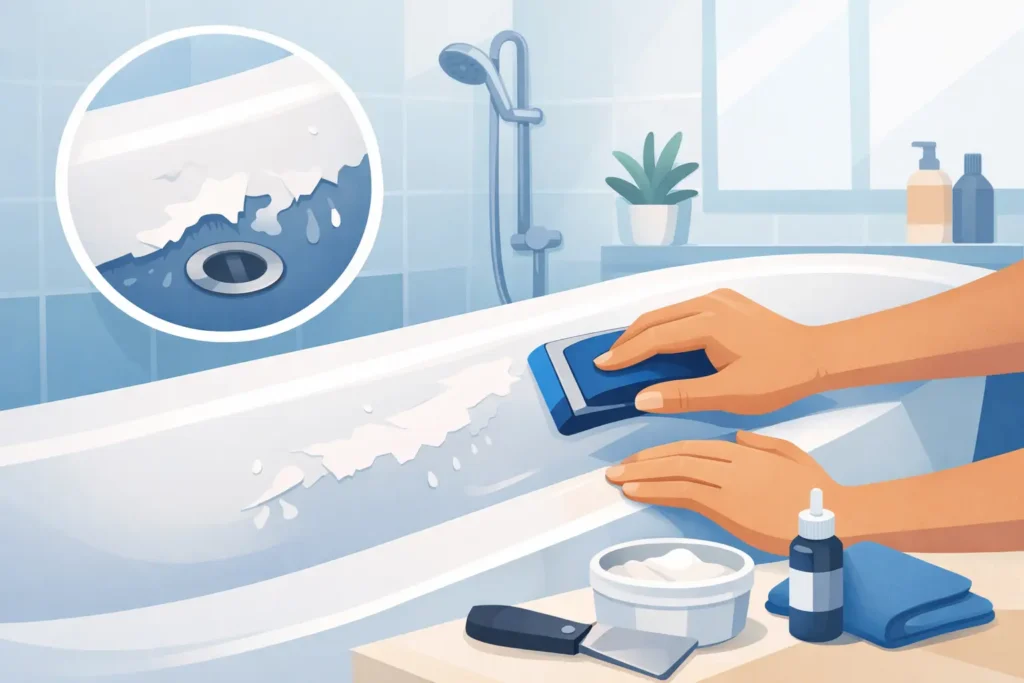
A bathtub can look worn out long before it is actually worn through. If you need to repair a peeling bathtub finish, the right solution may restore the surface without removing the tub, opening walls, or taking on the cost of a full bathroom remodel. The key is determining whether the peeling is limited to the existing coating or whether the tub itself has deeper damage.
For many homeowners, professional refinishing is the practical answer. A properly prepared and refinished tub can look clean, bright, and updated in a fraction of the time replacement requires.
Table of Contents
ToggleWhy Bathtub Finishes Start Peeling
Peeling is usually a coating problem, not a sign that the entire bathtub needs to be replaced. Many older tubs have been refinished before, and that finish can fail when it was not properly bonded to the surface. Moisture, harsh cleaners, dropped objects, and normal daily use can all make an aging coating separate from the tub.
Common causes include poor surface preparation during a previous refinishing job, applying a new coating over an unstable old coating, or using abrasive products that gradually wear down the finish. Strong chemical drain cleaners, bleach-heavy cleaning routines, and bath mats with suction cups can also damage a reglazed surface over time.
The appearance of the peeling provides useful clues. Small chips around the drain, overflow, or tub edge may point to localized impact or water exposure. Broad sheets of finish lifting away often suggest that an earlier coating did not adhere correctly. Either way, simply brushing paint over the damaged area rarely creates a lasting repair.
Can You Repair a Peeling Bathtub Finish?
In many cases, yes. A peeling bathtub finish can often be professionally repaired through reglazing or refinishing, provided the tub is structurally sound. Cast iron, steel, fiberglass, and acrylic tubs can all be candidates, although the process and expected results depend on the material and the condition underneath the peeling layer.
A professional assessment should look beyond the visible flakes. The surface must be checked for cracks, rust, soft areas, deep gouges, water damage, and loose coating around the affected area. If the tub has major structural damage or repeated cracking, replacement may be the more sensible investment. But if the base is stable, refinishing can extend its usable life and dramatically improve the room’s appearance.
This is where the cost difference matters. Replacing a bathtub often means more than buying a new fixture. It may involve demolition, plumbing adjustments, tile repair, flooring work, wall repairs, and several days of disruption. Refinishing keeps the existing tub in place and focuses the work on restoring the visible surface.
How Professional Bathtub Refinishing Repairs Peeling
A lasting repair begins with preparation. The peeling finish cannot be treated like a minor paint touch-up because any loose or poorly bonded material can compromise the new surface. A qualified refinishing technician removes failing coating, cleans the tub thoroughly, and prepares the surface so the new finish has a stable foundation.
Small chips, scratches, and surface imperfections are repaired before the coating is applied. The tub is then carefully masked to protect surrounding tile, fixtures, walls, and flooring. After preparation, a durable refinishing coating is applied in controlled layers to create an even, refreshed appearance.
The result is not just a tub that looks whiter or cleaner. Proper refinishing can cover stains, worn areas, chips, and dated colors while creating a smooth surface that is easier to maintain. It is a visible upgrade without the expense and mess of tearing out the existing fixture.
Why DIY Repair Kits Often Fall Short
A do-it-yourself kit may seem appealing when the peeling is limited to one small area. For a temporary cosmetic improvement, it can sometimes help. The trade-off is durability. Most consumer kits do not provide the same surface preparation, coating quality, ventilation controls, or application equipment used in professional refinishing.
DIY repairs can also create a bigger problem when the coating does not bond evenly. Brush marks, uneven gloss, rough texture, and renewed peeling are common concerns. If the finish fails again, the surface may require more extensive preparation before it can be professionally restored.
There is also a safety factor. Refinishing materials require careful handling and proper ventilation. A bathroom is a confined space, and strong coating fumes are not something to take lightly. Homeowners who want a reliable, long-lasting result usually find that professional service offers better value than repeating a temporary patch.
When Refinishing Is the Better Choice
Refinishing is often a strong choice when your tub is solid but looks outdated or neglected. It works especially well for tubs with surface staining, fading, minor chips, discoloration, and peeling from an old reglazing job. It is also useful when you are updating a bathroom for resale, preparing a rental property, or improving a family bathroom on a realistic budget.
It may not be the right solution when a tub has severe rust-through, extensive cracks, significant movement, or water damage behind the fixture. A professional should be honest about those limits. The goal is not to cover up a structural problem. The goal is to restore a fixture that still has years of service left.
Color is another practical benefit. A refinished tub can help a dated bathroom feel more current without replacing tile, fixtures, or cabinetry. White remains a popular choice because it creates a clean, bright look, but homeowners may also have finish options that better suit their existing design.
Protecting Your New Bathtub Finish
Once a peeling bathtub finish has been professionally restored, simple care will help it stay attractive longer. Use a nonabrasive cleaner and a soft sponge or cloth. Avoid scouring powders, steel wool, abrasive scrub pads, and harsh chemical cleaners that can dull or weaken the coating.
Do not leave bottles, soap dishes, or wet bath mats sitting in the tub for long periods. If you use a bath mat, choose one without suction cups, as suction can pull on a refinished surface over time. Repair dripping faucets promptly, since constant water exposure can wear on the area beneath the spout.
It also helps to avoid dropping heavy items into the tub. A refinished surface is durable, but it is not indestructible. Treating it with reasonable care protects the finish and helps preserve the clean look you paid for.
A Faster Way to Update an Aging Bathroom
When a bathtub finish begins peeling, it can make the entire bathroom feel less clean, even when you keep it spotless. The good news is that a failing surface does not automatically mean a major renovation. Professional bathtub refinishing offers a faster, more affordable, and more eco-friendly way to restore a tub that still has a solid foundation.
Bath Tub Reglazing Inc helps homeowners restore worn tubs with practical refinishing solutions designed to reduce disruption and avoid unnecessary replacement. A consultation can clarify whether your tub is a good candidate and what result you can expect before committing to a larger remodeling project.
A peeling tub does not have to stay the feature you avoid showing guests. With the right repair approach, it can become one of the cleanest-looking surfaces in the room again.