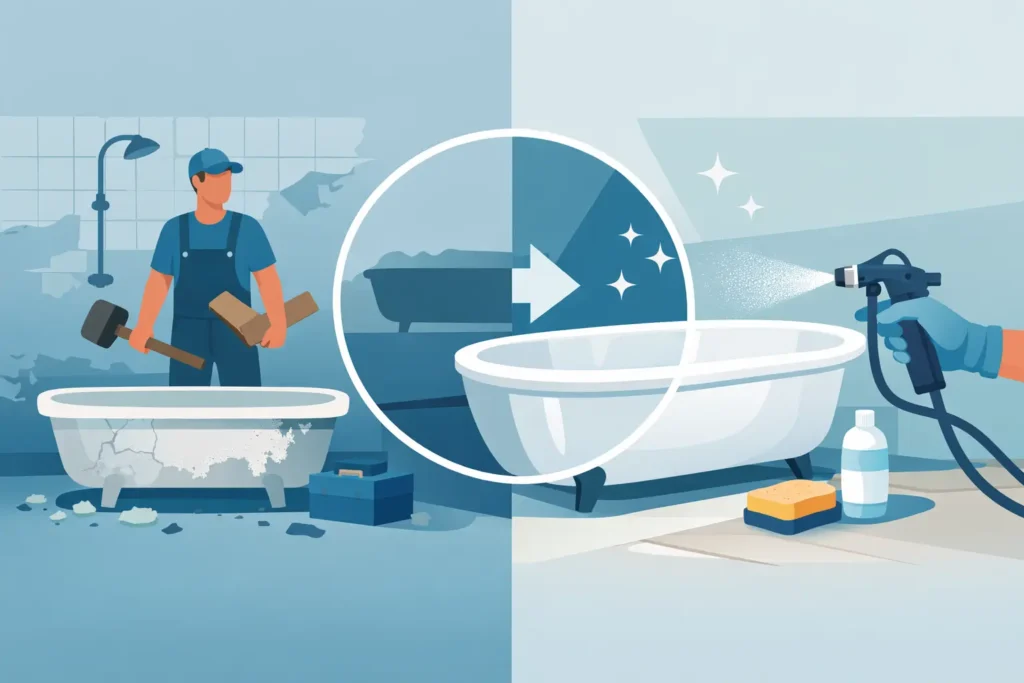
A stained, chipped, or outdated bathtub can make the whole bathroom feel older than it is. When homeowners start asking whether to replace tub or reglaze, they are usually trying to solve two problems at once: improve the look of the space and avoid turning a simple upgrade into a full renovation.
For many homes, the right answer comes down to condition, budget, and how much disruption you are willing to accept. Both options can improve the bathroom, but they are not equal in cost, timing, or the amount of work involved. If you want a practical decision instead of a sales pitch, it helps to look at what each option really changes.
Table of Contents
ToggleReplace tub or reglaze: the core difference
Reglazing keeps your existing tub in place and restores the surface. The old finish is cleaned, repaired, prepared, and coated so the tub looks fresh again. This is usually the better fit when the tub is structurally sound but the surface looks worn, stained, chipped, or dated.
Replacement removes the existing bathtub and installs a new one. That sounds straightforward, but in many bathrooms it can also involve plumbing adjustments, tile work, wall repairs, flooring touch-ups, and disposal of the old fixture. The new tub may be the goal, but the surrounding work is often what drives up the cost and timeline.
That is why this choice is rarely just about the tub itself. It is about how much of the bathroom you want to disturb in order to get the result you want.
When reglazing makes more sense
If your tub is ugly but usable, reglazing is often the practical answer. Surface damage like discoloration, minor chips, dullness, and cosmetic wear usually does not require demolition. In those cases, refinishing gives homeowners a cleaner, updated look without removing the fixture.
This route makes the most sense when the bathtub still has good structure. If it is solid, holds water properly, and does not have major cracks or movement, restoring the finish can extend its life and improve the whole bathroom quickly.
Reglazing also works well when the tub color is the problem. Many older bathrooms have tubs in outdated shades that make the room feel stuck in another decade. A fresh white or modern neutral finish can change the feel of the space without changing the layout.
For busy households, the timing matters too. Replacement often stretches into a larger project. Reglazing is usually much faster, which makes it attractive for homeowners who want visible improvement without losing the bathroom for an extended period.
When replacement is the better choice
There are times when replacement is the smarter long-term move. If the tub has serious structural damage, active leaks, extensive rust-through, or major instability, a new finish will not fix the underlying problem. Reglazing improves surfaces, but it does not rebuild a failing fixture.
Replacement may also be worth it if you are already doing a full bathroom remodel. If walls are being opened, plumbing is being relocated, and the layout is changing, installing a new tub can fit naturally into the project.
Some homeowners also want a different tub size, depth, or style. If your goal is not just to refresh the look but to switch from a standard tub to a soaking tub, for example, refinishing will not get you there. At that point, replacement is about function as much as appearance.
Cost is usually the tipping point
For most homeowners, the real question is not whether a new tub sounds nice. It is whether the added expense delivers enough added value.
Reglazing is typically far more affordable than replacement because it avoids demolition, disposal, many material costs, and much of the labor that comes with opening up the bathroom. That makes it appealing to families, landlords, and homeowners who want to improve the space without committing to a major renovation budget.
Replacement costs can climb quickly because the tub itself is only one part of the total. Once the old tub comes out, hidden issues may appear. Damaged wallboard, plumbing updates, tile mismatch, and flooring repairs can add cost fast. A project that starts as a tub swap can turn into a bigger job than expected.
That does not mean replacement is wrong. It just means homeowners should compare the total project cost, not only the price tag of a new tub at the store.
Appearance and results
A professionally reglazed tub can make a bathroom look dramatically cleaner and newer. For homeowners focused on appearance, that is often enough. If the surrounding tile, vanity, and fixtures are staying in place, a refreshed tub surface can lift the room without requiring a full remodel.
The key word is professionally. Surface preparation and coating quality matter. A rushed or poorly done refinishing job can leave texture issues, adhesion problems, or a finish that does not last the way it should. Done correctly, the result is smooth, bright, and clearly restored.
Replacement gives you a brand-new fixture, which can be the right visual move in a full redesign. But if your existing tub shape already works for the room, the visual difference between a new tub and a well-reglazed one may not justify the extra work.
Durability depends on the situation
Homeowners often assume replacement always wins on durability. Sometimes that is true, but not always in the way people expect.
A new tub can last a long time, but that does not automatically make replacement the best value for every bathroom. If your current tub is made from solid cast iron or quality material and only the finish is worn, keeping it and restoring the surface can be a very smart move. Older tubs are often heavier and more durable than many lower-cost modern replacements.
A reglazed tub is not the same as a brand-new factory finish, and it should be treated with proper care. Harsh abrasives, suction-cup mats, and neglected maintenance can shorten the life of the new coating. But with reasonable care and professional application, reglazing can provide lasting improvement and postpone the need for replacement.
The disruption factor homeowners underestimate
One of the biggest differences between the two options is how much they interrupt your home.
Replacing a tub often means noise, debris, hauling materials in and out, and dealing with the surfaces around the tub. In many bathrooms, the tub is installed in a tight alcove, which makes removal more involved than homeowners expect. Even a simple replacement can affect nearby tile, drywall, trim, or plumbing access.
Reglazing is usually a much less invasive process. That matters if you have one main bathroom, a busy household, or simply do not want your home turned into a work zone over a cosmetic problem.
For homeowners looking for quick, affordable, and eco-friendly solutions, refinishing stands out because it improves what you already have instead of sending a large fixture to the landfill and starting over.
How to decide whether to replace tub or reglaze
A practical decision starts with three questions. First, is the tub structurally sound? If yes, reglazing stays on the table. Second, are you solving a cosmetic problem or a functional one? Cosmetic issues usually point toward refinishing, while structural or layout issues lean toward replacement. Third, do you want a better-looking bathroom or a full remodel? Those are very different goals with very different budgets.
If you are mainly bothered by stains, chips, dull finish, or an outdated color, replacement may be more project than you need. If the tub is failing, leaking, or no longer suits the bathroom plan, it may be time to replace it.
This is where a professional assessment helps. An experienced refinishing specialist can tell you whether your tub is a strong candidate for restoration or whether the damage has gone beyond what surface work should handle. Companies like Bath Tub Reglazing Inc focus on that practical middle ground homeowners often want most: noticeable improvement without unnecessary renovation.
The smarter choice is the one that fits the tub and the house
There is no single answer that works for every bathroom. Replacement makes sense when the fixture is failing or the room is being rebuilt. Reglazing makes sense when the tub is still solid and the real problem is how it looks.
If your goal is to refresh the bathroom, control costs, and avoid the mess of demolition, refinishing is often the move that gives you the most improvement for the least disruption. A worn tub does not always need to be torn out. Sometimes it just needs the right restoration to make the room feel new again.