If your bathtub is stained, chipped, dull, or stuck in another decade, replacement can feel like the only real fix. In most cases, it is not. When homeowners compare bathtub refinishing vs reglazing, they are usually trying to answer a simple question – are these different services, or two names for the same solution?
The short answer is that they are often used interchangeably. In many homes, both terms describe the process of repairing surface wear and applying a new coating to restore the tub’s appearance. The confusion comes from how contractors use the language. Some use refinishing as the broad term and reglazing as the final coating step. Others use reglazing as the full service name. What matters more than the label is the quality of the prep, repair work, coating system, and application.
Table of Contents
ToggleBathtub refinishing vs reglazing: is there a real difference?
For most homeowners, the difference is more about wording than outcome. Both services aim to restore the surface of an existing tub without tearing it out. That means no demolition, no hauling the old fixture away, and no replacing surrounding tile or plumbing just because the tub looks worn.
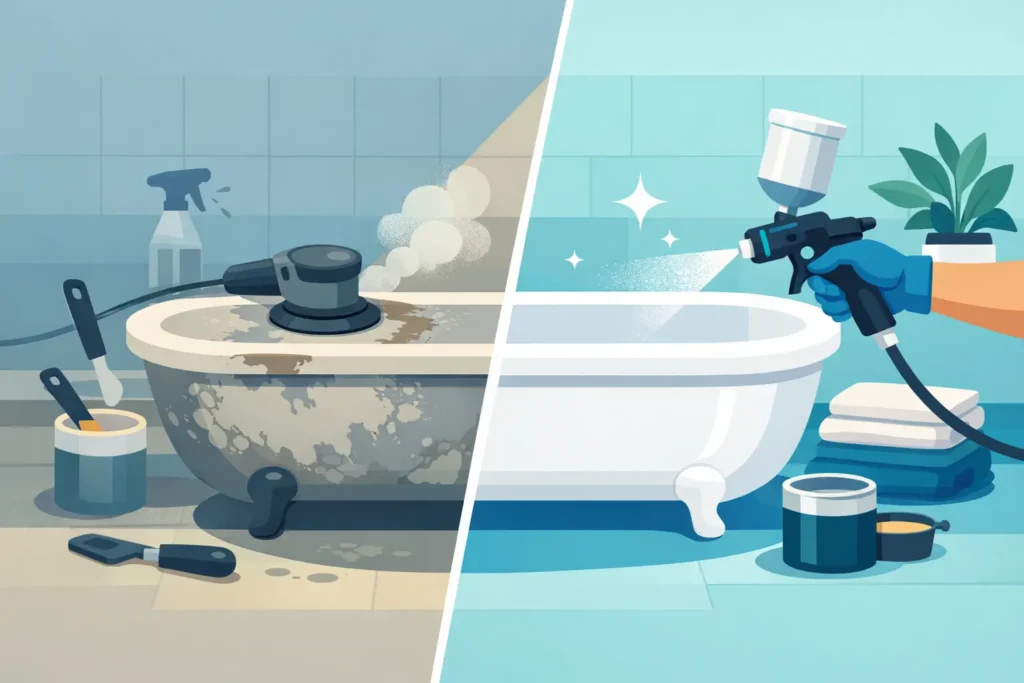
In everyday use, bathtub refinishing usually refers to the complete restoration process. That can include cleaning away buildup, etching or sanding the surface, repairing chips or minor cracks, and applying bonding agents and topcoats. Reglazing is often used to describe the new finish that gives the tub its clean, glossy, updated appearance.
Still, there is no universal rule in the industry. One company may advertise reglazing as the entire service, while another may present it as one stage within refinishing. If you are comparing estimates, it helps to ask exactly what is included instead of assuming the terms mean different levels of work.
What homeowners usually mean when they ask about these services
Most people are not asking for a technical distinction. They want to know whether their bathtub can be made to look newer, how long it will take, what it will cost compared to replacement, and how long the result will last.
That is where professional surface restoration stands out. A properly refinished or reglazed tub can dramatically improve the look of a bathroom in a fraction of the time and cost of full replacement. For households trying to avoid a drawn-out remodel, that practical advantage matters more than the vocabulary.
What bathtub refinishing typically includes
A professional refinishing service usually starts with surface preparation. This is the part homeowners do not always see, but it has a major effect on durability. Soap residue, mineral deposits, body oils, and old caulk all need to be removed so the new finish can bond correctly.
After that, minor damage is addressed. Small chips, pitted areas, light cracks, or rough spots can often be repaired before the coating is applied. Once the surface is smooth and ready, the technician applies the primer or bonding layer and then the new finish coat.
The result is a tub that looks cleaner, brighter, and more current without the disruption of replacement. White remains the most common choice, but many homeowners also choose updated colors to better match their bathroom.
Where reglazing fits into the process
If a company draws a distinction between the two terms, reglazing usually refers to the finishing stage. This is the coating that creates the smooth outer surface and renewed shine. It is what gives an older tub that fresh, like-new appearance.
That does not mean reglazing is a minor step. It is one of the most visible and important parts of the job. But a good-looking finish depends on everything that comes before it. If the prep is rushed or surface repairs are skipped, the coating may not perform the way homeowners expect.
That is why the better question is not whether you need refinishing or reglazing. It is whether the company is providing a complete process that leads to a strong, attractive result.
Bathtub refinishing vs reglazing vs replacement
This is where the decision becomes practical. If your tub is structurally sound but the surface is stained, chipped, worn, or outdated, refinishing is often the better value. It gives you a major visual upgrade without the high labor costs that come with removal and installation.
Replacement makes more sense when the tub has serious structural damage, major leaks, or installation problems that surface restoration cannot solve. If the fixture itself is failing, coating the surface will not address the underlying issue.
For many homeowners, though, the tub is still solid. The problem is cosmetic wear. In that situation, refinishing or reglazing can be the smarter option because it improves the bathroom without turning the project into a full renovation.
Cost, timing, and disruption
One reason these services appeal to homeowners is simple – they solve a visible problem fast. A replacement project can expand quickly once demolition begins. Tile, plumbing connections, walls, flooring, and disposal all add cost and time.
Refinishing is far more contained. In most cases, the work can be completed much faster than replacement, and the surrounding bathroom stays largely intact. That means less disruption to daily life, which is a major benefit for busy households, landlords, and anyone working within a set budget.
The cost savings can also be significant. Instead of paying for a new tub plus demolition and installation, homeowners invest in restoring what they already have. When the existing fixture is worth saving, that can be a much more efficient use of money.
How long does a refinished or reglazed tub last?
This depends on the condition of the tub, the materials used, the quality of the application, and how the surface is maintained afterward. A professionally restored tub can last for years when it is cared for properly.
That said, not all jobs hold up the same way. DIY kits may look appealing because of the lower upfront cost, but the finish often does not match the appearance or durability of professional work. Surface prep, ventilation, repair quality, and product selection all matter. A poor application can lead to peeling, uneven texture, or early wear.
Professional service gives homeowners a better chance at a finish that looks right and lasts longer. For a room used every day, that reliability matters.
When refinishing is a strong fit
A bathtub is often a good candidate for refinishing if it has surface stains, discoloration, minor chips, dullness, or an outdated finish but is otherwise in solid condition. This is especially true in older homes where the original tub may be heavier or better built than many newer replacement options.
It is also a strong fit for homeowners preparing a home for sale, updating a rental, or improving a bathroom without committing to a full remodel. The visual change can be significant, and the project usually fits better within a practical improvement budget.
Companies like Bath Tub Reglazing Inc build their service around that need – helping homeowners restore beauty to existing fixtures quickly, affordably, and with less waste than replacement.
Questions to ask before booking
If you are comparing providers, ask what is included in the service. Find out whether chip repair, surface prep, caulk removal, and final coating are part of the quoted price. Ask how long the tub needs to cure before use and what cleaning methods are recommended afterward.
It is also smart to ask about the condition limits of the service. A trustworthy company should be clear about when refinishing is a good option and when replacement would be more appropriate. That kind of honesty usually tells you a lot about the quality of the business.
The bottom line on bathtub refinishing vs reglazing
For most homeowners, bathtub refinishing vs reglazing is not really a choice between two completely different services. In many cases, they describe the same practical solution: restoring the bathtub you already have so it looks clean, updated, and usable again.
The better focus is on results. If the tub is structurally sound and the problem is wear on the surface, professional restoration can save money, avoid demolition, and refresh the whole bathroom faster than replacement. A worn tub does not always need to be removed. Sometimes it just needs the right process and the right hands behind it.
If your bathroom is being held back by an old finish, start by looking at what can be restored before assuming it has to be replaced. The smartest upgrade is often the one that gives you a visible change without turning your home upside down.