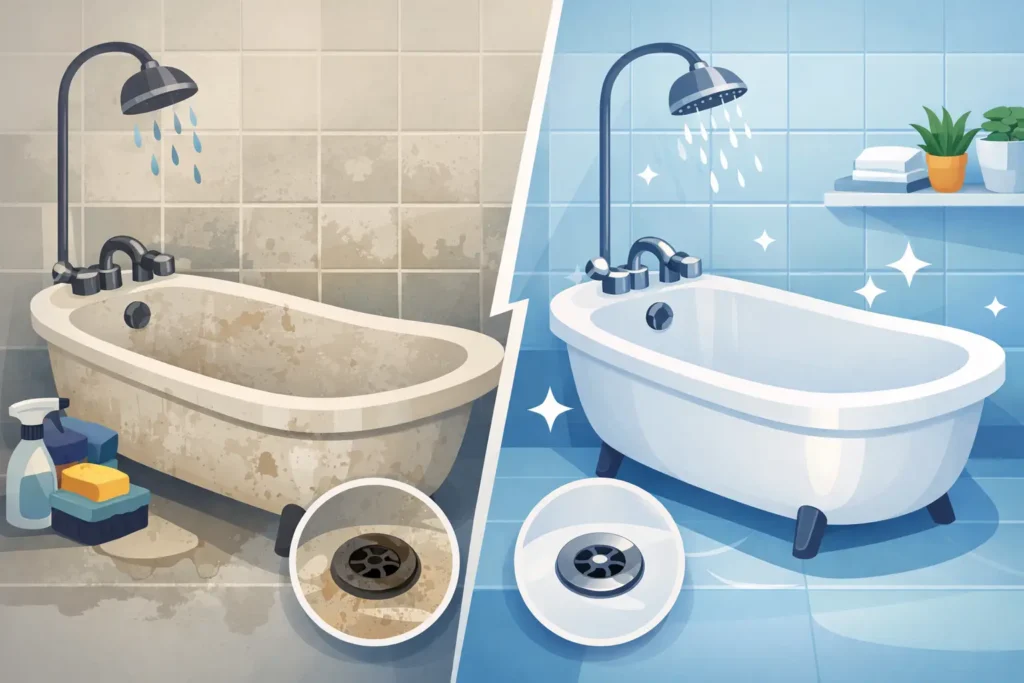
A bathtub can make the entire bathroom feel older than it is. Yellowing, stubborn stains, chips around the drain, and a dull finish often stand out even when the room is clean. Bathtub reglazing before after examples show why refinishing is a practical choice for homeowners who want a visible upgrade without removing a usable fixture, opening walls, or committing to a full remodel.
The most impressive transformations are not always dramatic color changes. Often, the difference comes from restoring a smooth, bright, even surface that makes the bathroom look clean, cared for, and current again. Here is what homeowners can realistically expect from professional bathtub reglazing.
Table of Contents
ToggleWhat Bathtub Reglazing Before and After Examples Show
Before-and-after photos are helpful because they show more than a fresh coat of color. They reveal how refinishing changes the way a worn tub reflects light, how much less noticeable old damage becomes, and how a dated bathroom can look more finished without replacing the tub itself.
A quality reglazing project begins with preparation, not paint. The existing surface is cleaned, repaired where needed, and properly prepared so the new finish can bond correctly. The tub is then refinished with a durable coating designed to create a smooth, consistent appearance.
The “before” side commonly includes dull porcelain, discoloration that will not lift with normal cleaning, small chips, rust stains, or an outdated color. The “after” side should look even and glossy, with repaired areas blended into the new finish. It should not look like a quick DIY coating or leave visible brush marks, rough patches, or uneven color.
Example 1: A Yellowed White Tub Becomes Bright Again
One of the most common bathtub reglazing examples starts with a white tub that no longer looks white. Mineral buildup, years of cleaning products, sunlight, and normal wear can leave the surface yellowed or gray. In many cases, homeowners keep scrubbing because they assume the tub is dirty. The issue is often a worn finish rather than surface grime.
After reglazing, the tub can return to a clean, bright white appearance. This creates immediate contrast against tile, walls, and flooring, making the room feel lighter. White remains a popular finish because it works with nearly every bathroom style and helps a smaller space feel more open.
This option is especially useful when the tile and tub are structurally sound but the tub has become the visual problem in the room. Rather than replacing a fixture that still fits the space properly, refinishing restores its appearance at a fraction of the disruption.
Example 2: Chips and Rust Marks Are Repaired and Blended
Chips around the drain, along the rim, or on the bottom of the tub can make a bathroom look neglected. If the exposed area reaches metal, moisture can also lead to rust staining. These flaws may look small, but they pull attention quickly because they interrupt an otherwise solid surface.
In a professional refinishing project, minor chips and surface damage are repaired before the final coating is applied. The goal is not simply to cover the chip. It is to level and blend the area so the completed tub has a consistent finish.
The before-and-after difference is often most noticeable up close. A chipped, rusty spot that once looked permanent can disappear into a smooth new surface. However, refinishing is best for cosmetic wear and repairable damage. If a tub has major cracks, severe corrosion, structural movement, or plumbing problems beneath it, replacement or repair may be the better long-term choice.
Example 3: An Outdated Colored Tub Looks Current
Avocado green, powder blue, peach, beige, and pink tubs are part of many older homes. Some homeowners enjoy the original style, but others want a cleaner, more modern bathroom without replacing the fixture and possibly disturbing surrounding tile.
Reglazing allows the tub color to change while keeping the existing fixture in place. A bright white finish is often selected for a classic look, while other finish options may suit the room’s design and existing materials. The result can be surprisingly significant: the same bathroom layout suddenly feels less dated because the largest fixture no longer anchors the room in another decade.
Color change is a strong example of where refinishing delivers value. Replacing a cast iron tub or an older built-in tub can involve demolition, hauling, plumbing work, tile repair, and unexpected costs. Reglazing focuses the investment on the visible surface homeowners want to improve.
Example 4: A Dull, Worn Finish Looks Smooth and Clean
Not every worn bathtub has obvious chips or stains. Some simply lose their shine over time. The surface may feel rough, look chalky, or develop areas that hold soap residue because the original finish has worn down.
The after photo in this type of project often shows the value of a uniform gloss. Light reflects evenly across the refinished surface, which gives the tub a cleaner appearance even before the rest of the bathroom is updated. This is a practical improvement for rental properties, homes being prepared for sale, and homeowners who want to refresh the room before tackling larger upgrades later.
A new finish also simplifies the visual maintenance of the bathroom. While every tub still needs regular cleaning, a smooth, properly refinished surface does not have the same tired, porous-looking appearance as an aging finish.
What a Realistic “After” Should Look Like
High-quality bathtub reglazing should look clean, even, and appropriate for the fixture. The finish should have consistent color across the basin, sides, and rim. Repairs should blend in rather than remain obvious. Caulk lines and surrounding areas should also be protected during the work so the completed bathroom looks neat, not rushed.
At the same time, homeowners should have realistic expectations. Reglazing renews the visible surface, but it does not change the size, shape, or design of the tub. A narrow older tub will still be narrow. A tub with an awkward layout will still have that layout. Refinishing is the right solution when the fixture is functional and the main concern is its appearance.
It also depends on the tub’s condition. A professional consultation can identify whether stains, chips, discoloration, and worn finishes are suitable for refinishing. That assessment helps prevent spending money on a cosmetic solution when a larger repair is actually needed.
Why the Transformation Matters Beyond Appearance
The best bathtub reglazing before after examples show an obvious visual difference, but the benefit is not only cosmetic. Refinishing avoids the demolition associated with tub replacement. That can mean less noise, less dust, fewer scheduling complications, and less risk of needing to replace tile or flooring that was not originally part of the plan.
It is also an eco-friendly restoration choice. Keeping a sound fixture out of the landfill preserves materials that are still useful. For homeowners balancing a budget, a busy household, and a desire for a cleaner-looking bathroom, that is a meaningful advantage.
Fast turnaround is another reason refinishing works well. A full bathroom renovation can affect daily routines for weeks. Reglazing is a focused service designed to improve one of the room’s largest surfaces without turning the entire bathroom into a construction zone.
How to Keep the “After” Looking Its Best
A refinished tub needs sensible care to protect its new surface. Use non-abrasive cleaners, a soft sponge or cloth, and avoid harsh scouring powders or rough scrub pads. Do not leave bath mats with suction cups in the tub, since they can damage the finish over time. It is also wise to address dripping faucets promptly, as constant water exposure can create staining and wear in one area.
Follow the care instructions provided after the service, including the recommended curing time before using the tub. A little routine attention helps preserve the smooth appearance that made the transformation worthwhile.
If your bathtub is structurally sound but looks stained, chipped, dull, or outdated, a professional refinishing consultation can give you a clear answer before you commit to replacement. The right project does not need a full renovation to make the bathroom feel restored.