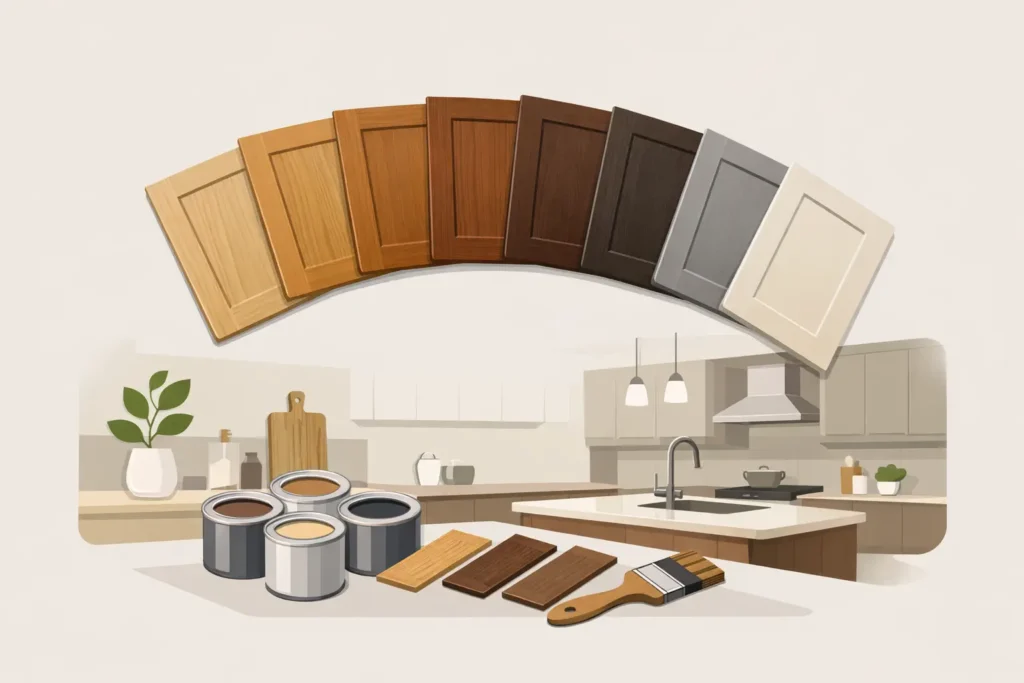
Picking cabinet color sounds simple until you are standing in your kitchen comparing stain samples that all look different from morning to evening. The best kitchen cabinet stain colors are the ones that work with your wood species, lighting, counters, and the level of upkeep you are willing to live with. A stain that looks rich in a showroom can feel too dark in a small kitchen, while a pale stain can look washed out if the wood grain is inconsistent.
For most homeowners, the goal is not to chase a trend. It is to make existing cabinets look cleaner, newer, and better matched to the rest of the room without the expense and disruption of full replacement. That is where stain color matters. It keeps the natural character of the wood while changing the overall feel of the space.
Table of Contents
ToggleHow to choose the best kitchen cabinet stain colors
The right stain color depends on more than personal taste. Wood species is a major factor because oak, maple, cherry, and birch all absorb stain differently. Oak tends to show strong grain and can handle medium to dark stains well. Maple has a tighter grain and may look smoother and more modern, but it can also stain unevenly if not prepared correctly.
Lighting matters just as much. A medium brown stain may read warm and balanced in a bright kitchen with natural light, but the same color can look heavier in a room with small windows. Existing finishes also shape the result. If your floors, counters, or backsplash already carry strong undertones, your cabinet stain should support them rather than compete with them.
There is also the practical side. Darker stains can help camouflage minor wear and create contrast, but they may show dust and fingerprints more easily. Lighter stains often feel airy and current, though they can highlight dents, scratches, or uneven grain. The best choice is usually the one that fits your kitchen’s size, style, and daily use.
9 best kitchen cabinet stain colors for a lasting update
1. Light oak
Light oak is a dependable choice for homeowners who want warmth without heaviness. It keeps the kitchen bright and shows off natural wood grain in a clean, approachable way. This color works especially well in smaller kitchens or in homes where you want a relaxed, natural look.
It pairs easily with white countertops, black hardware, and simple backsplashes. If your goal is a refreshed kitchen that feels current but not trendy, light oak is a strong option.
2. Honey brown
Honey brown brings in a little more warmth and richness than a pale oak stain. It has a comfortable, familiar look that fits traditional kitchens, transitional spaces, and many family homes. If your cabinets currently look faded or dull, a honey-toned stain can make them feel healthy and finished again.
This color is especially useful when you want a noticeable update without pushing too dark. It can also soften kitchens with a lot of cool gray or stark white surfaces.
3. Natural walnut
Walnut-inspired stains are popular because they deliver depth without looking too formal. A natural walnut tone feels refined, warm, and timeless. It works well in kitchens that mix modern and classic elements, such as shaker doors with stone countertops or updated lighting.
This is often one of the safest medium-dark options because it adds richness while still letting the wood feel real and approachable. If you want your cabinets to look elevated but not overly dramatic, walnut is worth serious consideration.
4. Medium brown
Medium brown remains one of the most flexible choices available. It sits comfortably between light and dark, making it useful for homeowners who want a balanced result. It hides wear better than very light stains and usually feels less heavy than espresso.
For many kitchens, medium brown is the practical middle ground. It complements stainless steel appliances, white walls, and most countertop materials without forcing the room in one strong design direction.
5. Chestnut
Chestnut has more red and warmth than a standard brown stain. In the right kitchen, that warmth makes cabinets feel richer and more inviting. It can be a strong fit for older homes, kitchens with beige or cream elements, or spaces where cooler gray tones would feel too sharp.
The trade-off is that red undertones are not for everyone. If your flooring already has orange or red tones, chestnut can either pull the room together or make it feel too warm. Sampling it next to your fixed surfaces is important.
6. Driftwood brown
Driftwood brown is a softer, more muted stain that works well when you want a modernized wood look without going fully gray. It tones down orange or yellow undertones and can make older cabinets feel more current. This is a good fit for homeowners who want subtle change rather than a dramatic transformation.
It works especially well with matte black hardware, white quartz counters, and simple contemporary finishes. The look is calm and updated without feeling cold.
7. Gray-brown stain
Gray-brown sits between warm wood and cooler design trends. For some kitchens, that blend is exactly what makes it practical. It can help bridge older flooring with newer counters or appliances, especially when a pure gray stain would look flat or artificial.
This color does depend on lighting. In dim kitchens, it can lose warmth and feel muddy. In bright kitchens, it often reads balanced and sophisticated. It is one of those shades where testing samples in place is not optional.
8. Espresso
Espresso creates contrast and brings a more dramatic, polished look. It can make basic cabinet styles feel more substantial and upscale. In larger kitchens with good lighting, espresso can be striking and elegant.
Still, this is not the right answer for every home. In a tight kitchen, very dark cabinets can close the room in. They also tend to show dust, smudges, and edge wear more clearly. If you like the richness of dark wood but want something easier to live with, walnut or medium brown may be a better fit.
9. Dark walnut
Dark walnut offers much of the depth of espresso with a slightly softer, more natural result. It reads rich and classic rather than stark. For homeowners who want a darker cabinet finish that still shows warmth and grain, this is often the better choice.
It works well in kitchens with white walls, brushed metal finishes, and lighter countertops. It also fits homes where the goal is a substantial update that still feels timeless several years from now.
Which cabinet stain colors work best by kitchen style
If your kitchen leans modern, lighter natural stains, driftwood brown, and select walnut tones usually work best. They keep lines clean and let the room feel open. If the space is more traditional, honey brown, chestnut, and medium brown tend to feel more consistent with the home.
For transitional kitchens, the most reliable choices are often light oak, medium brown, and natural walnut. These shades are flexible enough to work with changing hardware, paint colors, and countertop updates over time. That matters if you want a finish that will still make sense as other elements of the room evolve.
If resale is part of the decision, safe usually beats bold. Neutral wood stains with balanced warmth tend to appeal to more buyers than very red, very orange, or very dark finishes. That does not mean dark stains are a mistake. It just means they should fit the kitchen rather than lead the entire design.
Refinishing vs. replacing when changing cabinet stain color
For many homeowners, cabinet refinishing is the smarter path when the cabinet boxes and doors are still structurally sound. Replacing cabinets costs more, takes longer, and often turns a surface update into a larger renovation. If your main issue is outdated color, surface wear, or a finish that no longer works with the room, refinishing can deliver a major visual improvement without tearing the kitchen apart.
Stain selection also tends to feel more manageable during a refinishing project because the focus stays on improving what you already have. A professional refinishing service can help you evaluate what your wood can realistically achieve, which matters because not every cabinet material or existing finish responds the same way to a color change.
That is one reason many homeowners choose a company like Bath Tub Reglazing Inc for cabinet refinishing. The goal is simple: update the look, avoid unnecessary replacement, and get results faster and more affordably than a full remodel.
A few mistakes to avoid before choosing a stain
The most common mistake is picking a color from a tiny sample without seeing it in your kitchen. Light changes everything. So do surrounding surfaces. Another mistake is choosing a stain based only on trend photos, especially if those kitchens have different cabinet wood, room size, or natural light than yours.
It also helps to think beyond the cabinet doors themselves. Flooring, wall color, backsplash, and hardware all affect whether a stain feels balanced. The best result usually comes from choosing a stain that supports the whole kitchen rather than trying to make the cabinets stand out on their own.
A good cabinet stain should make your kitchen feel more current, more cohesive, and easier to enjoy every day. If you focus on how the color performs in your actual space, the right choice tends to become much clearer.