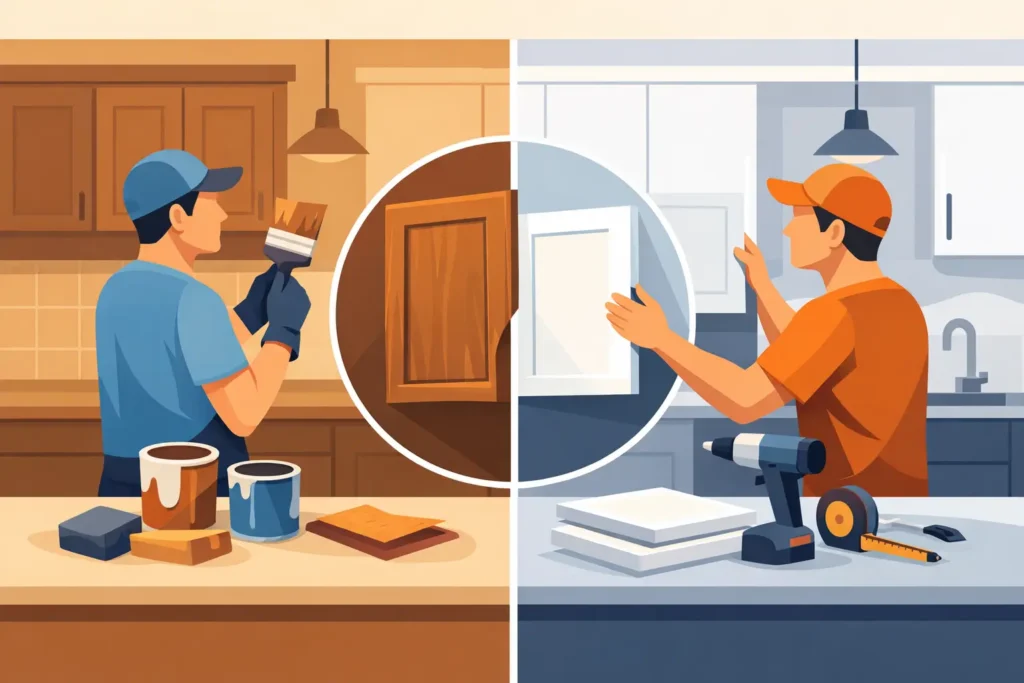
If your kitchen cabinets look tired but the layout still works, the real question is not whether you need a full remodel. It is whether cabinet refinishing vs refacing makes more sense for your home, budget, and timeline. For many homeowners, the right choice comes down to how much change you want and how much disruption you are willing to live with.
Both options improve the look of existing cabinets without tearing out the whole kitchen. That is the good news. The difference is in what gets changed, how long it takes, and what kind of result you should expect when the work is done.
Table of Contents
ToggleWhat cabinet refinishing actually means
Cabinet refinishing keeps your existing cabinet boxes, doors, and drawer fronts, then restores the visible surfaces. In most cases, that means cleaning, repairing minor wear, prepping the finish, and applying a new coating that gives the cabinets a fresh, updated appearance.
This is usually the better fit when your cabinet doors are in decent shape but the finish looks worn, faded, stained, or outdated. If you like the door style and your cabinets are structurally sound, refinishing can deliver a big visual improvement without the cost of replacing parts that still work.
Homeowners often choose refinishing when they want a fast turnaround and a cleaner process. There is less material involved, less waste, and usually far less disruption than a larger cabinet project.
What cabinet refacing means
Cabinet refacing also keeps the existing cabinet boxes, but it changes more of what you see. The cabinet boxes are covered with a new exterior veneer or laminate, and the doors and drawer fronts are replaced. New hardware is often installed at the same time.
This option makes sense when the cabinet boxes are in good condition but the door style feels dated or damaged beyond simple surface restoration. If you want to move from an older raised-panel look to a more modern shaker style, refacing can create a more noticeable design change than refinishing.
Refacing is still less invasive than full cabinet replacement, but it is a bigger step than refinishing. There are more materials, more components, and usually a higher overall cost.
Cabinet refinishing vs refacing: the biggest differences
The simplest way to compare cabinet refinishing vs refacing is to look at what stays and what changes. Refinishing updates the finish on the parts you already have. Refacing replaces the doors and drawer fronts and covers the cabinet boxes to match.
That difference affects almost everything else.
Cost is usually the first factor homeowners care about. Refinishing is typically the more affordable option because it uses more of your existing materials. Refacing costs more because it includes new doors, new drawer fronts, and new coverings for the exposed cabinet surfaces.
Appearance is the next major factor. Refinishing can dramatically improve color, sheen, and overall cleanliness, but it does not change the basic style of the doors. Refacing can give your kitchen a more transformed look because the door profile itself changes.
Project speed matters too. Refinishing is often faster because the process is centered on surface preparation and coating rather than replacing visible components. Refacing usually takes longer because there are more pieces to produce, fit, and install.
Then there is the question of waste. Both options are more eco-friendly than replacing the entire cabinet system, but refinishing tends to preserve the most material. If reducing landfill waste matters to you, that can be a meaningful advantage.
When refinishing is the smarter choice
Refinishing is often the better value when your cabinets are still solid, your doors open and close properly, and you do not need a new style. Many kitchens simply suffer from normal wear – grease buildup, faded stain, surface scratches, chipped paint, or a finish that makes the whole room feel older than it is.
In those cases, refinishing solves the actual problem. You are not paying to replace parts that still function well. You are restoring what is already there and improving the look of the kitchen in a practical way.
This option is especially appealing for homeowners who want to update the room without weeks of renovation. If you are living in the home during the project, shorter timelines and less disruption matter. That is one reason service-based restoration companies like Bath Tub Reglazing Inc focus on refinishing as a smart alternative to replacement.
Refinishing also works well when the goal is budget control. If you want a cleaner, brighter, more current kitchen but do not need custom cabinetry, refinishing often gets you the result you want for significantly less.
When refacing makes more sense
Refacing is a better fit when the cabinet boxes are worth keeping but the doors are not. Sometimes the style is so dated that a new finish alone will not move the look of the kitchen far enough. In other cases, the doors may be warped, cracked, heavily worn, or mismatched from past repairs.
If you want a different door design, refacing gives you that flexibility. It can make an older kitchen feel more current without requiring a full tear-out. For homeowners who want more than a color change but still want to avoid full replacement, refacing can be a practical middle ground.
The trade-off is cost. You are paying for a larger visual update, but you are also taking on a more involved project. That does not make refacing a bad choice. It just means the value depends on your priorities.
Condition matters more than most homeowners expect
A lot of people start by comparing prices, but cabinet condition should come first. If your cabinet boxes are weak, water-damaged, swollen, or poorly installed, neither refinishing nor refacing may be the right answer. Surface improvements do not fix structural problems.
On the other hand, if the cabinets are solid and the issues are mostly cosmetic, restoration options become much more attractive. A professional assessment can tell you whether the finish is the problem, the doors are the problem, or the whole cabinet system is nearing the end of its useful life.
This is where honest guidance matters. The best result is not the biggest project. It is the one that addresses the actual condition of your cabinets without pushing you into unnecessary replacement.
Which option gives the best return?
For many homeowners, refinishing delivers the stronger return because the investment is lower and the visual improvement is immediate. A fresh cabinet finish can make the entire kitchen feel cleaner, brighter, and better maintained. That matters whether you plan to stay in the home or prepare it for sale.
Refacing can also add value, especially if the old door style is a major drawback. But the return depends on how much you spend and whether the rest of the kitchen matches the update. If the countertops, flooring, and backsplash are all dated, new cabinet doors alone may not create the full effect you want.
That is why it helps to look at the kitchen as a whole. Sometimes a refinishing project paired with updated hardware is enough to make the space feel refreshed. Sometimes the style change from refacing is worth the extra investment. It depends on what is making the kitchen feel old in the first place.
How to decide without overpaying
A practical decision usually comes down to three questions. Are your cabinets structurally sound? Do you like the current door style? And how much do you want to spend to get the kitchen looking better?
If the cabinets are solid and the style still works for you, refinishing is often the clear choice. If the cabinets are solid but the doors look outdated or damaged, refacing may be worth considering. If the boxes themselves are failing, it may be time to talk about replacement instead.
It also helps to think about your timeline. Homeowners who want a fast, affordable update with less mess often lean toward refinishing. Homeowners who want a more noticeable style change may accept the added cost and time of refacing.
Neither option is automatically better. The better option is the one that matches your cabinets, your goals, and your tolerance for cost and disruption.
A kitchen does not have to be torn apart to look better. If your cabinets still have good years left in them, the smartest upgrade may be the one that restores what you already own and gets your home back to normal faster.