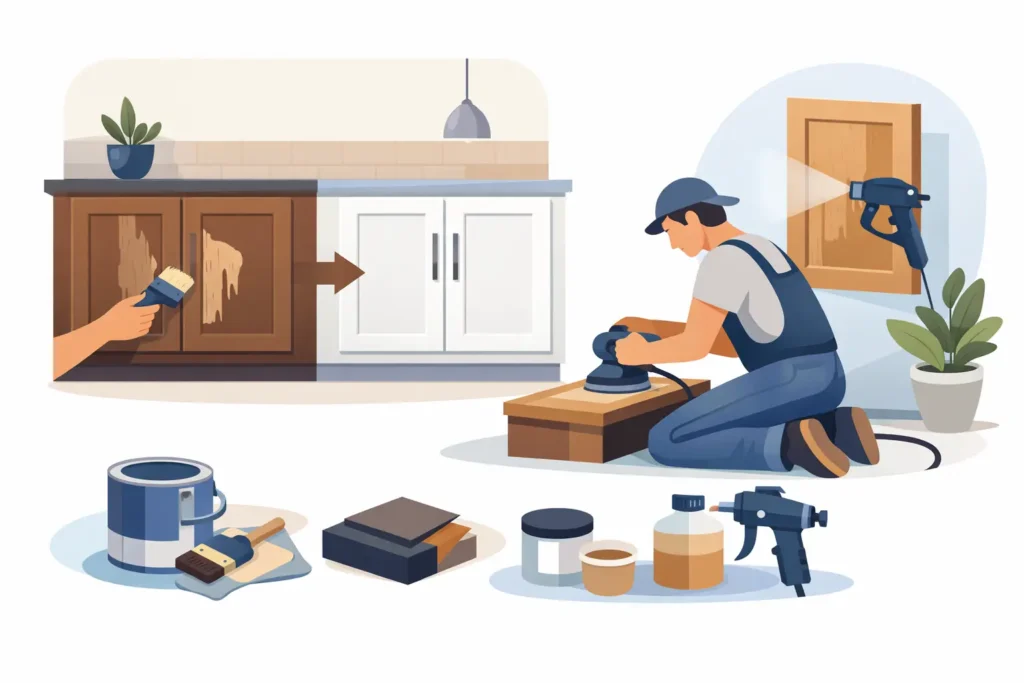
If your kitchen cabinets look tired but the boxes are still solid, the question usually comes up fast: can cabinets be refinished? In many homes, the answer is yes. Refinishing is often the most practical way to update worn, stained, scratched, or dated cabinets without the cost, mess, and downtime of a full replacement.
For homeowners who want a visible upgrade without tearing apart the kitchen, cabinet refinishing hits the right balance. You keep the cabinet structure you already have, improve the finish, and get a cleaner, more current look in much less time than a remodel. That makes it a strong option when your cabinets are functional but no longer look the way you want.
Table of Contents
ToggleCan cabinets be refinished in every kitchen?
Not every cabinet is a good candidate, but many are. The best results usually come from cabinets that are structurally sound, with doors and drawer fronts that still open, close, and align properly. If the main problem is cosmetic wear rather than serious damage, refinishing is worth considering.
Wood cabinets are often excellent candidates because they can accept new stain or paint when properly prepared. Many MDF, laminate, or previously painted surfaces can also be refinished, but the process and materials may differ. What matters most is the condition of the surface and whether it can be cleaned, repaired, sanded, and coated for long-term adhesion.
If cabinets are swollen from water damage, badly warped, falling apart at the joints, or built from very low-grade materials that are failing, replacement may make more sense. Refinishing improves what is already there. It does not solve major structural problems.
What cabinet refinishing can actually fix
Homeowners sometimes assume refinishing is only for small cosmetic touch-ups. In reality, it can make a major difference in the overall look of a kitchen. A professional refinishing service can often address faded finishes, surface scratches, minor chips, grease buildup, discoloration around handles, and color styles that feel stuck in another decade.
It can also help unify a kitchen that feels visually worn even when nothing is technically broken. Orange-toned wood, dull oak, dated stain colors, and old painted finishes can all make the space feel older than it is. Changing the finish to a brighter paint color or a more current stain can shift the entire room.
That said, there are limits. Deep gouges, severe peeling from years of moisture exposure, and broken doors may need repair or replacement before refinishing begins. A good assessment is less about whether the cabinets are old and more about whether they are still serviceable.
Why homeowners choose refinishing over replacement
The biggest reason is cost. Cabinet replacement can quickly turn into a larger renovation once demolition starts. Countertops, backsplash edges, flooring transitions, plumbing access, and wall repairs can all become part of the project. Refinishing avoids much of that domino effect because the cabinet layout stays in place.
The second reason is speed. Replacing cabinets can take weeks when you factor in design, ordering, delivery, removal, installation, and follow-up work. Refinishing is much faster in comparison, especially for homeowners who want an updated kitchen without putting daily life on hold for an extended period.
There is also the issue of waste. If your cabinets are still usable, removing and discarding them is often unnecessary. Refinishing extends the life of the materials you already have, which is a more eco-conscious choice and a practical one.
How the refinishing process works
A quality cabinet refinishing job starts with preparation, not paint. Surfaces need to be thoroughly cleaned to remove cooking oils, wax, residue, and grime that build up over time. If this step is skipped or rushed, the new finish may not bond correctly.
After cleaning, the surfaces are repaired as needed. Small dents, chips, and surface flaws can often be filled and smoothed. Then the cabinets are sanded or otherwise prepped to create the right surface profile for primer or stain.
From there, the finish system depends on the desired result and the cabinet material. Painted cabinets usually involve a bonding primer followed by multiple coats of a durable cabinet-grade finish. Stained cabinets may be stripped or sanded down, then re-stained and sealed. Professional application matters because cabinets take daily wear, and the finish has to hold up to repeated contact, cleaning, moisture, and kitchen heat.
Doors and drawer fronts are often removed during the process so they can be finished evenly. This helps create a cleaner final appearance and allows the coating to cure more consistently.
Painted vs. stained cabinets
One of the most common decisions in a refinishing project is whether to paint or re-stain. The right choice depends on the cabinet material, the existing finish, and the look you want.
Painting is popular because it creates the most dramatic visual change. It works well when homeowners want to brighten a dark kitchen, modernize older wood tones, or coordinate cabinets with updated counters and flooring. White, off-white, greige, navy, charcoal, and soft green tones remain popular because they feel current without being too trendy.
Re-staining is often the better fit when the natural wood grain is attractive and you want to preserve that character. It can refresh faded wood, tone down orange or red undertones, and give the cabinets a richer, more updated finish without covering the grain completely.
Neither option is automatically better. Paint offers more color flexibility, while stain can highlight the material itself. The best result comes from matching the finish to the cabinet style and the rest of the room.
When DIY refinishing goes wrong
Cabinet refinishing looks simple online, but kitchens are high-use spaces, and cabinet surfaces are less forgiving than walls. The most common DIY problems are poor cleaning, weak surface prep, visible brush marks, drips, uneven color, and finishes that chip too soon.
Another issue is product choice. Cabinets need coatings designed for durability and adhesion, not just general-purpose paint. Homeowners also underestimate how much time is involved in removing hardware, labeling doors, prepping every surface, allowing proper drying time, and reinstalling everything correctly.
A professional refinishing service helps reduce those risks. You get a more even finish, better material performance, and a faster turnaround. For homeowners trying to improve the kitchen without turning it into a drawn-out project, that reliability matters.
How long refinished cabinets last
When cabinets are properly prepared and professionally coated, refinishing can last for years. Longevity depends on the existing cabinet condition, the products used, the skill of the application, and how the cabinets are maintained afterward.
Kitchen cabinets naturally take abuse. Hands touch them constantly, grease settles over time, and areas near sinks and dishwashers face extra moisture. Even so, a high-quality finish can hold up very well with normal care. Gentle cleaning, avoiding abrasive scrubbers, and quickly wiping away moisture all help protect the result.
In many cases, refinishing gives homeowners the extra life they need from their cabinets without committing to a full renovation. That makes it especially appealing for families balancing home improvement goals with a realistic budget.
Signs your cabinets are good candidates
If you are still deciding whether refinishing is the right move, focus on the basics. Cabinets are usually good candidates when the layout works, the storage still meets your needs, the cabinet boxes are solid, and the main issue is appearance. If you look at your kitchen and think, “I don’t hate the setup, I just hate how it looks,” refinishing is often the smart answer.
This is especially true for homeowners preparing to sell, updating an older home in phases, or refreshing a kitchen that feels dated but functions well. You can get a major visual improvement without taking on a full-scale remodel.
Bath Tub Reglazing Inc works with homeowners who want exactly that kind of upgrade – a faster, more affordable way to restore beauty to the spaces they use every day.
So, can cabinets be refinished?
Yes, many cabinets can be refinished, and for the right kitchen, it is one of the most cost-effective upgrades available. The key is understanding what refinishing can and cannot do. It can transform worn, outdated, or dull cabinets into a cleaner, fresher, more modern feature. It cannot rebuild failing cabinet structures or fix a layout that no longer works.
If your cabinets are still solid, refinishing is often the practical middle ground between living with a kitchen you do not enjoy and spending far more on replacement than you need to. A fresh finish can change how the entire room feels, and sometimes that is all it takes to make your kitchen feel current again.