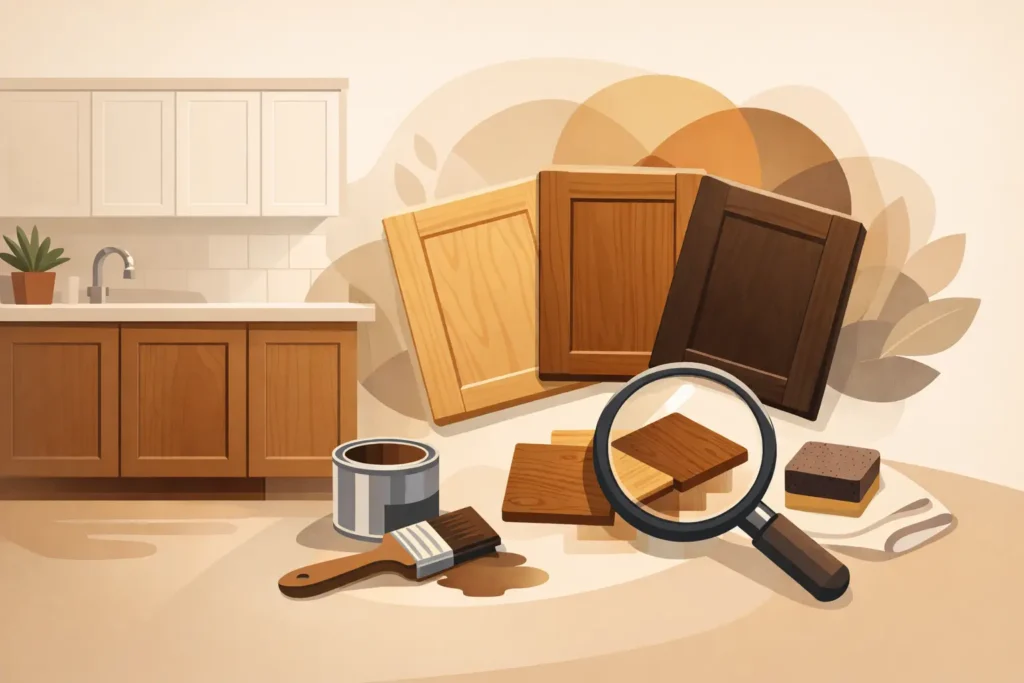
If one cabinet door is lighter than the rest, or a new panel stands out after a repair, the whole kitchen can look off even when the cabinets are still in good shape. That is why homeowners often ask how to match kitchen cabinet stain without replacing everything. The short answer is that stain matching is possible, but it takes more than grabbing the closest can of color off the shelf.
A good match depends on wood species, age, grain pattern, existing finish, lighting, and application method. In some kitchens, a near-perfect match is realistic. In others, especially with older cabinets that have faded unevenly, the better solution may be refinishing a larger section so the final result looks intentional instead of patched.
Table of Contents
ToggleWhat affects how well you can match kitchen cabinet stain
Stain does not sit on wood like paint. It reacts with the material underneath it, which is why two cabinets can take the same stain and still look different. Oak, maple, cherry, and birch each absorb color in their own way. Even two pieces of oak can vary because of grain direction and natural tone.
Age also changes the equation. Sun exposure, cooking grease, cleaning products, and normal wear can all shift cabinet color over time. A stain color that matched perfectly ten years ago may look too red, too dark, or too clean today. That is one reason stain matching is often part color science and part visual judgment.
The topcoat matters too. A satin protective finish can soften color, while a glossy topcoat can make it appear richer and deeper. If you focus only on the stain and ignore the sheen, the repair may still look wrong once everything dries.
Start by identifying what you are really trying to match
Before choosing a stain, look closely at the cabinet you want to blend with. Are you matching the wood tone, the undertone, the depth of color, or the final sheen? Those are not always the same thing.
For example, some cabinets read as medium brown at first glance, but up close they have golden, red, or gray undertones. Others appear darker because of glazing, age, or a tinted topcoat rather than the stain itself. If you miss that detail, the new piece may be close in color but still look noticeably separate.
It helps to compare cabinet parts in natural daylight and under the kitchen lights. A stain that seems right in the garage can look too orange once it is back in the room. Lighting changes everything, especially with warm wood finishes.
How to match kitchen cabinet stain step by step
The most reliable approach is to treat stain matching as a testing process, not a one-shot decision. That takes a little more time up front, but it helps you avoid obvious color misses.
1. Clean the cabinet first
Any grease, wax, or buildup on the existing cabinet surface can distort the color you are trying to match. Clean the area thoroughly so you are comparing the true finish, not years of kitchen residue. This step is especially important near stoves and sinks where cabinets collect more grime.
2. Identify the wood if possible
If the new piece is a replacement door, drawer front, or end panel, find out what wood it is made from. Matching stain on maple to surrounding oak cabinets is much harder than matching oak to oak. The grain alone can give the repair away, even if the color is close.
If you do not know the species, a professional can usually make an educated assessment based on grain and absorption pattern. That matters because some woods need conditioner or toner to avoid blotchiness.
3. Test on scrap wood or a hidden area
Never judge a stain color from the label alone. Test it on the same wood species whenever possible. If that is not available, use a hidden area first. Let the stain dry fully, then apply the intended topcoat. Many homeowners skip the topcoat in testing and end up surprised by the final look.
This is also where custom mixing often comes in. A straight can color may be too red, too dark, or too flat. Blending stains can create a closer result, especially for older cabinet finishes that no longer match standard off-the-shelf tones.
4. Adjust for undertone and depth
If the test piece is close but not quite there, look at what is wrong with it. Too yellow usually needs cooling down. Too pale may need another pass or a deeper base. Too dark may require starting over rather than trying to wipe it back after it sets.
This is where experience helps. Cabinet stain matching is rarely just about making it darker or lighter. The undertone has to be right for the repair to disappear visually.
5. Match the finish, not just the stain
Once the color is right, the sheen needs to follow. Matte, satin, semi-gloss, and gloss all reflect light differently. A good color with the wrong finish can still stand out from the rest of the kitchen.
If the surrounding cabinets have aged, a brand-new topcoat may also look too crisp. In some cases, the finish needs to be adjusted so the repaired section blends naturally with the existing cabinetry rather than looking freshly installed.
When a spot match works well
A localized stain match can work very well when the cabinets are in generally good condition and the issue is limited to one repaired area. Common examples include replacing a damaged door, fixing a water-marked drawer front, or blending a filled scratch.
It also works better when the original cabinet color is straightforward, such as a medium brown with minimal fading. The more uniform the kitchen finish is, the better the odds of a clean match.
For newer cabinets, matching is often easier because the finish has not had as much time to shift. If the surrounding surfaces still reflect their original color, a skilled refinisher has a stronger reference point.
When matching one area is not the best option
Sometimes the right answer is not how to match kitchen cabinet stain on one section, but whether you should. If the cabinets have uneven sun fading, heavy wear around handles, or an outdated orange or red tone throughout the kitchen, matching one part may make the rest of the issues more noticeable.
In that case, refinishing all doors, all visible faces, or the full cabinet set may give you a much better result. It often costs far less than replacement and avoids the disruption of tearing out functional cabinetry. For homeowners who want an updated look without a full remodel, this is usually the more practical path.
That is also true when cabinets have multiple problems at once, such as scratches, chips, discoloration, and old stain. A full refinishing approach creates consistency, which is hard to achieve with piecemeal repairs.
DIY stain matching vs professional refinishing
DIY stain matching can work for small touch-ups if you are patient, comfortable with test samples, and willing to accept that a close match may not be invisible. The challenge is that cabinets are eye-level surfaces in one of the most used rooms in the house. Small mistakes show.
Professional refinishing makes more sense when the repair is highly visible, the cabinet finish is older, or the color has layered complexity. A refinishing specialist can adjust stain, toner, and topcoat together instead of relying on a single can color. That usually leads to a more natural result and saves time spent redoing test applications.
For homeowners focused on value, this matters. Replacing cabinets to solve a stain mismatch is expensive and unnecessary in many cases. A professional refinishing service offers a faster, more affordable way to restore a consistent appearance while keeping the cabinets you already have.
A few practical expectations before you start
The goal is not always a laboratory-perfect color match. In real kitchens, success usually means the repaired or refinished section looks consistent under normal lighting and does not draw attention. That is a realistic standard and the one that matters most visually.
It is also worth knowing that natural wood has variation by design. A slight difference in grain is not the same as a poor stain match. What you want is harmony across the kitchen, not an unnaturally flat finish.
If your cabinets are worn but structurally solid, matching stain may be the first step in deciding whether a touch-up or a full refinishing project makes more sense. Companies like Bath Tub Reglazing Inc help homeowners take that practical middle path – improving the look of existing cabinets without the cost and mess of replacement.
A good stain match does more than fix one panel. It helps the whole kitchen feel cared for again, which is often exactly the update homeowners are looking for.