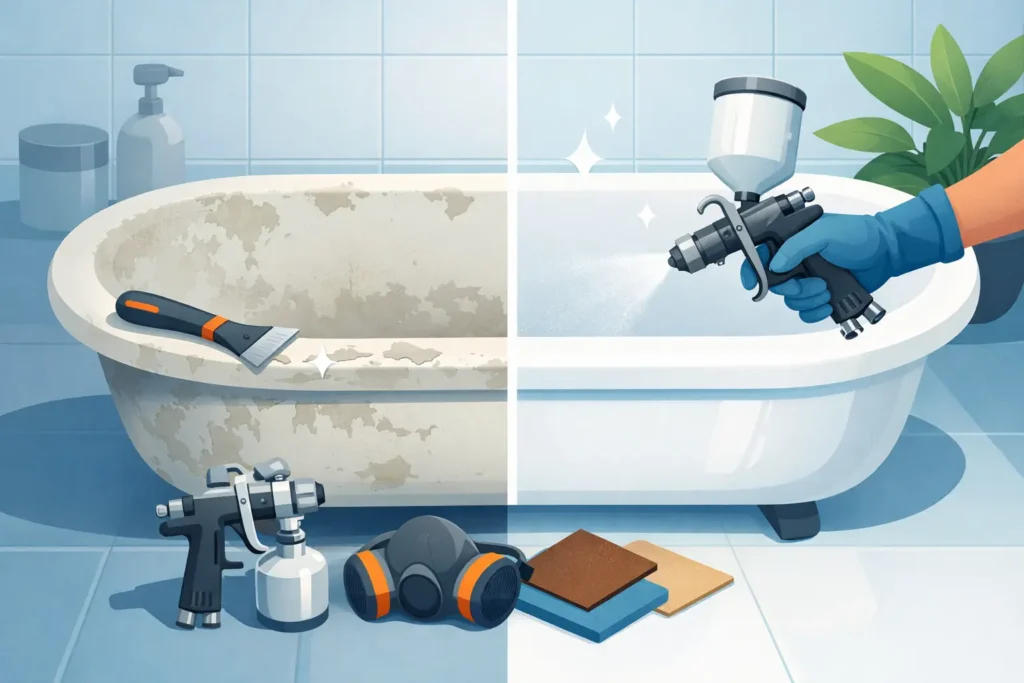
A bathtub does not have to be cracked in half to need attention. More often, the problem is a surface that looks tired – stains that never scrub out, chips around the drain, dullness, or a color that makes the whole bathroom feel older than it is. If you are researching how to refinish bathtub surface areas without tearing out the tub, the good news is that refinishing is often the fastest and most cost-effective path to a visible upgrade.
For many homeowners, the real question is not whether the tub can look better. It is whether refinishing will hold up, how the process works, and whether it makes sense to do it yourself or bring in a specialist. Those are the details that matter when you want a clean result without turning a simple bathroom update into a full renovation.
Table of Contents
ToggleHow to refinish bathtub surface without replacing the tub
Bathtub refinishing is a restoration process that renews the top layer of the tub rather than removing the fixture. The existing surface is cleaned, repaired, prepared, and coated with a new finish designed to improve appearance and extend usable life.
That matters because replacement is rarely just about the tub itself. Once demolition starts, costs often grow. Tile may need repair, plumbing adjustments may come up, and the bathroom can be out of service longer than expected. Refinishing avoids much of that disruption while still delivering a noticeably fresher look.
In practical terms, refinishing works best when the tub is structurally sound but cosmetically worn. If the issue is discoloration, minor chips, light rust staining, surface scratches, or an outdated finish, reglazing is usually a strong option. If the tub has major movement, severe structural damage, or widespread failure in the base material, replacement may be the smarter long-term choice.
What the bathtub refinishing process usually includes
A professional refinishing job is less about applying paint and more about preparation. The final appearance and durability depend heavily on how carefully the surface is cleaned and repaired before the new coating goes on.
Most projects begin with a deep cleaning to remove soap scum, body oils, mineral buildup, and residue from cleaning products. If those contaminants stay on the tub, the new finish may not bond properly. After cleaning, chips, cracks, or rough spots are repaired and sanded smooth so the final surface looks even.
The next step is surface preparation. This can include etching, sanding, or other methods that help create the right profile for adhesion. Then the surrounding area is masked off to protect tile, walls, fixtures, and flooring. Only after that prep work is complete does the refinishing coating get applied.
The coating itself is designed to restore gloss, color, and surface uniformity. Once cured, it gives the tub a cleaner, newer appearance. A professionally refinished bathtub can often be used again far sooner than a full replacement project would allow, which is one reason homeowners choose this route.
DIY vs professional bathtub refinishing
This is where expectations matter. A DIY kit may seem appealing because the upfront cost is lower, but the gap between a quick DIY attempt and a professional result is usually noticeable.
Homeowners who try to refinish a bathtub themselves often run into problems with prep, ventilation, application, and drying conditions. Even a small mistake can lead to peeling, bubbling, uneven texture, visible brush or roller marks, or a finish that looks good for a few weeks and then begins to fail.
Professional refinishing typically delivers better adhesion, a smoother finish, and a more consistent appearance. It also reduces the risk of damage from improper materials or poor surface prep. For a high-visibility fixture like a bathtub, that difference shows.
There is also a time trade-off. DIY can look cheaper on paper, but if the result fails and needs to be stripped, repaired, and redone, the total cost can rise quickly. Homeowners who want a dependable finish with less hassle often find that professional service is the more practical value.
When refinishing is the smart choice
Refinishing makes the most sense when your tub is still functional but no longer looks clean or current. That includes tubs with stubborn staining, worn gloss, minor chips, discoloration, or a dated color that drags down the room.
It is also a good fit when you want to improve the bathroom without opening up a larger remodeling project. Many homeowners are not trying to redesign the entire space. They simply want the tub to stop looking old, damaged, or impossible to keep clean.
Cost is another major factor. Full replacement often involves demolition, disposal, plumbing work, and finish repairs around the tub area. Refinishing keeps the existing fixture in place, which helps control both cost and disruption. For budget-conscious homeowners, that can make a significant difference.
There is an environmental benefit as well. Restoring the tub instead of sending it to a landfill reduces waste and avoids the extra materials that replacement usually requires. For many households, that is a worthwhile bonus on top of the savings.
Signs a bathtub may not be a good candidate
Refinishing is effective, but it is not the answer to every tub problem. If the tub has severe structural cracking, ongoing leaks, instability, or major damage beneath the surface, coating over it will not solve the real issue.
The same is true if a previous refinishing job is failing badly and the surface underneath is compromised. In some cases, a professional can strip and restore an older coating. In others, replacement is more realistic. That is why a clear inspection matters before any work begins.
A reputable refinishing company should tell you when refinishing is a good investment and when it is not. Straightforward guidance is part of the value.
How long does a refinished tub last?
Durability depends on the condition of the original tub, the quality of the prep and coating, and how the surface is maintained afterward. A professionally refinished bathtub can last for years when the work is done correctly and the tub is cared for properly.
That does not mean the surface is indestructible. Harsh abrasive cleaners, suction-cup bath mats, and repeated impact from heavy objects can shorten the life of the finish. Gentle cleaning and normal use help preserve the surface and keep the tub looking better longer.
This is another place where professional workmanship matters. A finish that bonds well and cures correctly has a much better chance of holding up under everyday use than a rushed or poorly prepared application.
What homeowners should expect before and after service
A refinishing project is generally much simpler than replacement, but it still helps to know what to expect. The bathroom needs to be accessible, the work area must be protected, and proper ventilation is part of the process. Depending on the service, there may be a curing period before the tub can be used again.
After the project, the biggest benefit is visual. The tub looks cleaner, brighter, and more current. That change can lift the appearance of the entire bathroom, especially if the tub was one of the most worn elements in the space.
For homeowners preparing to sell, refinishing can also improve first impressions without the cost of a major remodel. A stained or chipped tub tends to stand out for the wrong reasons. A refreshed surface makes the room feel better maintained.
Choosing the right refinishing company
If you are comparing providers, focus on clarity and results. Ask how they prepare the surface, what kinds of damage they can repair, how long the process takes, and what care the tub will need afterward. Before-and-after photos are useful because they show whether the company consistently delivers clean, even finishes.
You also want a company that treats refinishing as a skilled restoration service, not a shortcut. The difference shows in the final surface. Bath Tub Reglazing Inc serves homeowners who want an affordable alternative to replacement without giving up a professional-looking result.
When done properly, bathtub refinishing gives you something many home projects do not – a clear visual upgrade without demolition, extended downtime, or replacement-level cost. If your tub is worn but still worth keeping, refinishing can be the practical improvement that makes the whole bathroom feel newer again.