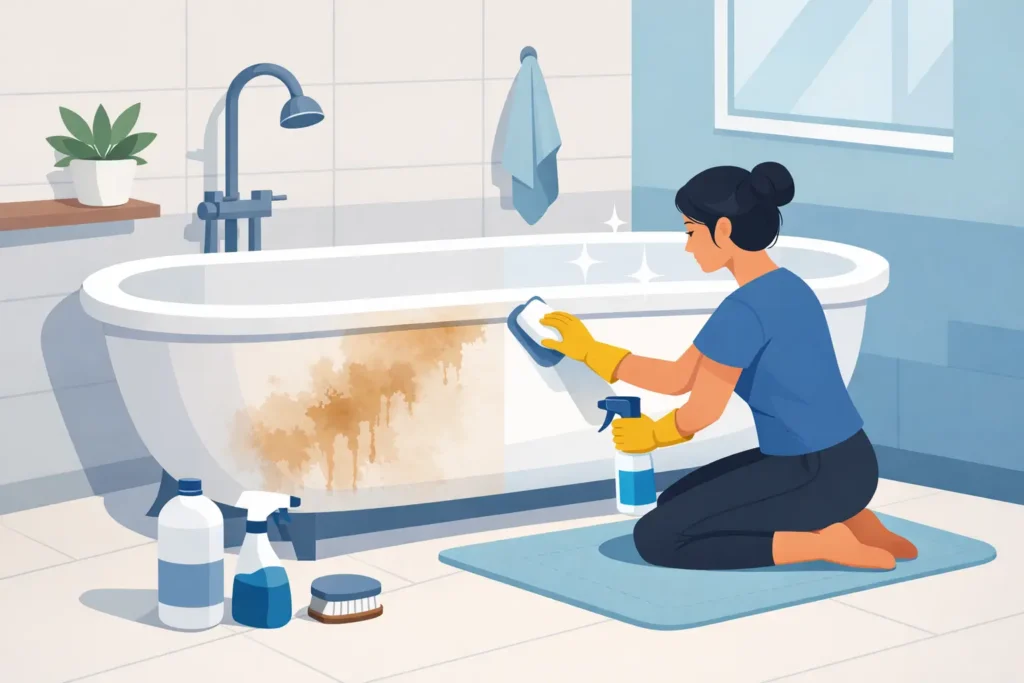
A bathtub can look worn out long before it is ready to be replaced. Rust-colored rings, dark marks around the drain, soap scum, and dull yellowing can make an otherwise functional bathroom feel neglected. Learning how to remove bathtub stains starts with identifying what caused the stain and what material your tub is made from. The wrong cleaner can scratch, dull, or further damage an aging surface.
For many homeowners, a careful cleaning restores a noticeably brighter tub. But when stains have worked into a damaged or worn finish, refinishing may be the more practical solution. It delivers a clean, updated appearance without the cost, demolition, and disruption of replacing the entire fixture.
Table of Contents
ToggleIdentify the Stain Before You Start
Not every bathtub stain responds to the same product. A cleaner that works well on mineral deposits may do little for rust, while a harsh abrasive that removes a stubborn mark can leave scratches behind on acrylic or fiberglass.
Soap scum usually appears as a cloudy, gray, or yellow film. It develops when soap, body oils, and hard-water minerals build up over time. Mineral stains often look white, chalky, or crusty, especially around the faucet and drain. Rust stains are typically orange, red, or brown and may come from iron in the water, corroded plumbing, or a chip in the tub surface. Dark stains can be mildew, mold, or discoloration in a worn finish.
Before applying any cleaner, rinse the tub and test the product in a small, less visible area. This is especially important if your tub is fiberglass, acrylic, or has been previously refinished.
How to Remove Bathtub Stains Safely
Start with the mildest effective method. A soft sponge, warm water, and a non-abrasive bathroom cleaner can remove fresh soap scum and everyday grime without putting the finish at risk. Let the cleaner sit for several minutes so it can loosen buildup, then wipe rather than scrub aggressively.
For a simple homemade approach, make a paste with baking soda and a small amount of water. Spread it over the stained area, allow it to sit for 10 to 15 minutes, then wipe it away with a soft cloth or non-scratch sponge. Baking soda is useful for light discoloration and soap residue, but it should still be used gently. Heavy scrubbing can dull certain finishes.
White vinegar can help break down hard-water deposits on porcelain or enamel tubs. Soak paper towels in vinegar, lay them over the mineral-stained area, and leave them in place for up to 30 minutes. Remove the towels, rinse thoroughly, and wipe clean. Do not use vinegar on natural stone surrounds, and use caution on older or damaged reglazed surfaces. Acidic cleaners can weaken a failing coating.
For rust stains, choose a cleaner made specifically for rust removal and approved for your tub material. Follow the label directions closely. Rust can be a surface issue, but it can also be a warning sign that the tub finish has chipped or that a plumbing issue needs attention.
Avoid steel wool, harsh scouring powders, and highly abrasive scrub pads. They may seem effective in the moment, but they can create tiny scratches that collect more dirt and make future staining worse. Bleach should also be used carefully. It may lighten some stains, but it does not remove mineral buildup and can damage or discolor certain finishes if left on too long.
Match the Method to Your Tub Material
Porcelain and cast-iron tubs are durable, but their enamel surface can still chip or become dull from repeated abrasive cleaning. Use non-scratch sponges and avoid harsh tools around existing chips.
Fiberglass and acrylic tubs require an even gentler approach. These surfaces scratch more easily, and strong solvents or abrasive powders may leave permanent marks. Use cleaners labeled safe for acrylic or fiberglass and wipe with a soft cloth.
A previously reglazed tub needs thoughtful care as well. Its new coating can provide a smooth, refreshed appearance, but abrasive cleaners and rough scrubbing shorten its life. A mild, non-abrasive cleaner is the best choice for regular maintenance.
When Cleaning Will Not Remove the Stain
Sometimes a stain is not sitting on the surface. It is part of the surface. If the tub has permanent yellowing, widespread dullness, peeling, rough patches, chips, or discoloration that returns shortly after cleaning, the finish may be worn down.
This is common in older tubs that have been cleaned with harsh products for years. Once the protective finish becomes porous or damaged, it can absorb residue and moisture. The tub may look dirty even immediately after a thorough cleaning because the discoloration is below the surface layer.
At this point, repeated scrubbing is usually a poor trade-off. It takes time, may make the finish worse, and rarely produces a lasting improvement. Full replacement is an option, but it can involve removing tile, plumbing work, demolition, disposal, and several days of disruption.
Professional bathtub reglazing offers a practical middle ground. The existing tub stays in place while the surface is repaired, prepared, and refinished. Chips and worn areas can be addressed, and the tub receives a smooth new finish that changes the look of the bathroom without a major remodel.
A Better Option for Worn and Stained Tubs
Reglazing is particularly useful when the tub itself is structurally sound but looks dated, stained, or damaged. Rather than paying to replace a heavy cast-iron tub or tear out surrounding tile, homeowners can restore the fixture they already have.
The process is not simply painting over a stain. Proper refinishing requires careful surface preparation so the new coating can adhere correctly and look consistent. A professional can also evaluate whether a stain is cosmetic, whether a chip needs repair, or whether there is a moisture problem that should be fixed first.
Bath Tub Reglazing Inc helps homeowners restore stained, chipped, and outdated tubs with a quick, affordable, and eco-friendly alternative to replacement. For many homes, refinishing provides the visible upgrade people want while avoiding unnecessary renovation costs.
Keep New Stains From Coming Back
Once the tub is clean or refinished, simple habits make a meaningful difference. Rinse the tub after bathing to remove soap and shampoo residue. Wipe excess water from the floor and walls of the tub, particularly in hard-water areas where mineral deposits build quickly.
Use a mild cleaner regularly instead of waiting until buildup becomes stubborn. A weekly wipe-down is easier on the finish than a deep scrub every few months. Repair dripping faucets when possible, since constant water exposure can leave mineral rings and contribute to rust discoloration.
If your water has high iron or mineral content, stains may return more quickly regardless of how often you clean. In that case, cleaning is still helpful, but treating the water source or choosing a restored, easy-to-maintain finish may provide a better long-term result.
A brighter bathtub does not always require a full bathroom renovation. Start with the safest cleaning method for your surface, then pay attention to what the stain is telling you. When the finish itself has reached the end of its useful life, professional refinishing can restore the clean, polished look your bathroom deserves.