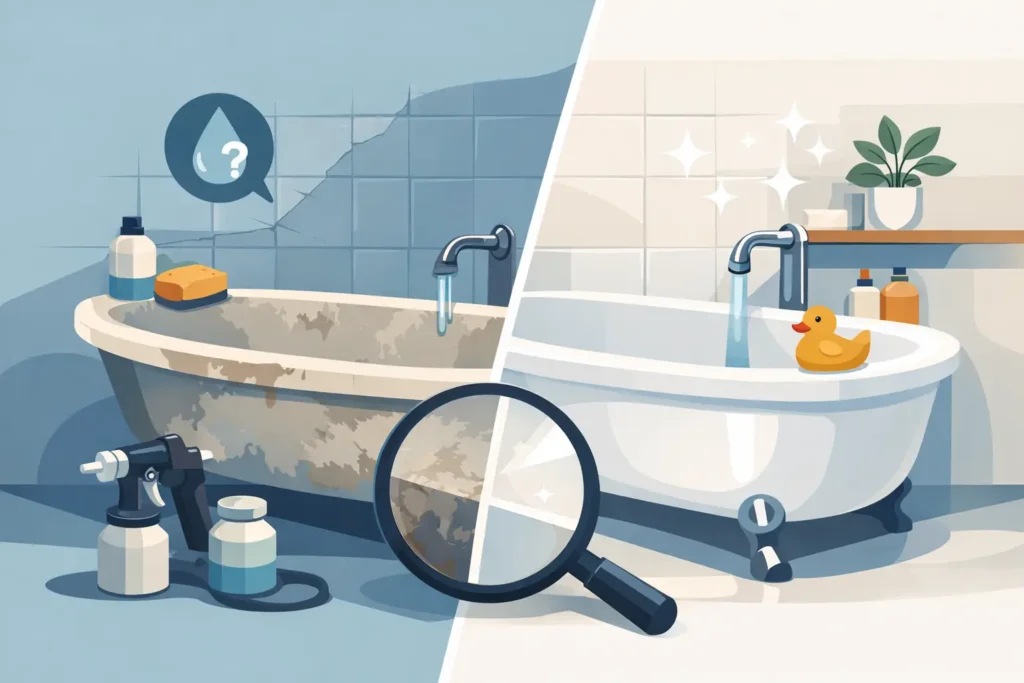
A stained, chipped, or faded bathtub can make the whole bathroom feel older than it is. Tub refinishing gives homeowners a practical way to restore that surface without tearing out tile, hauling out a heavy tub, or turning a simple upgrade into a full renovation.
For many households, the question is not whether the tub looks worn. It is whether fixing it makes more sense than replacing it. In a lot of cases, refinishing is the better move because it improves appearance, extends the life of the existing tub, and avoids the cost and disruption that come with demolition.
Table of Contents
ToggleWhat tub refinishing actually does
Tub refinishing is a professional process that repairs and renews the surface of an existing bathtub. Instead of removing the fixture, the tub is cleaned, prepped, repaired where needed, and coated with a new finish designed to create a smooth, updated appearance.
This is why refinishing appeals to homeowners who want visible results without committing to a larger remodel. If the tub is structurally sound but has cosmetic damage such as stains, chips, dullness, discoloration, or an outdated color, refinishing can address the problem directly.
It is also a smart option when the tub itself is still solid. Many older tubs were built to last, especially cast iron and heavy steel models. Replacing them can be expensive and unnecessary if the main issue is the worn finish.
When tub refinishing makes sense
Refinishing is usually the best fit when the damage is on the surface, not deep in the structure. A tub with mineral stains, rust marks, small chips, scratches, or general wear can often be restored successfully. The same goes for a bathtub that is technically functional but makes the room look dated.
Homeowners often choose tub refinishing when they are preparing a home for sale, updating a bathroom on a budget, or trying to improve an older property without weeks of construction. It is especially useful when the surrounding tile, plumbing, or layout does not need to change. In that situation, replacing the tub can create more work than the project really calls for.
There are limits, though. If a bathtub has severe structural cracks, major leaks, or long-term water damage around the installation, refinishing may not solve the real problem. That is where a professional assessment matters. The best results come when the underlying fixture is still in good enough condition to justify restoration.
Tub refinishing vs replacement
The biggest reason homeowners compare these two options comes down to cost, but money is only part of the decision. Replacement often triggers a chain reaction. Once the old tub comes out, there may be tile repair, plumbing adjustments, disposal fees, floor work, and additional labor that expands the budget quickly.
Tub refinishing avoids most of that. Because the fixture stays in place, the project is faster and far less disruptive. There is no demolition, no major tear-out, and usually no need to rebuild the surrounding bathroom just to solve a surface problem.
Time matters too. A replacement can stretch into a longer renovation timeline depending on materials, labor scheduling, and what gets uncovered during removal. Refinishing is typically much quicker, which is a major advantage for busy households and property owners who want the bathroom back in service as soon as possible.
There is also an environmental benefit. Keeping the existing tub out of the landfill reduces waste. For homeowners who want a practical home upgrade with less material disposal, refinishing is a more eco-conscious option than replacement.
What to expect from the tub refinishing process
Professional tub refinishing is straightforward, but the preparation stage is what makes the finished result hold up. The surface needs to be cleaned thoroughly to remove soap residue, body oils, mineral buildup, and any contaminants that could interfere with adhesion.
After cleaning, problem areas such as chips, small cracks, or rough spots are repaired and smoothed. The surface is then prepared so the new coating can bond properly. Once that prep work is complete, the refinishing material is applied to create a refreshed, even finish.
For homeowners, the main benefit is simplicity. The process is designed to improve the look of the tub without turning the bathroom into an active construction zone. A professional team also helps minimize common issues such as uneven texture, poor adhesion, or a finish that fails early because the prep work was rushed.
How long does a refinished tub last?
A professionally refinished tub can last for years when it is maintained correctly. The exact lifespan depends on the condition of the original tub, the quality of the materials used, the skill of the application, and how the tub is treated afterward.
This is one of those areas where cheap shortcuts usually show. A low-quality coating or poor surface prep can lead to peeling, bubbling, or dulling much sooner than expected. Professional refinishing is worth it because the appearance and durability depend heavily on doing each step correctly.
Daily use also plays a role. Harsh cleaners, abrasive scrubbers, bath mats with suction cups, and neglect can shorten the life of the new finish. A refinished tub does not require difficult care, but it does benefit from gentle cleaning and common-sense maintenance.
Common concerns homeowners have
One common concern is whether the tub will look obviously refinished. When the work is done well, the goal is a clean, smooth, like-new appearance, not a painted-over surface. Most homeowners are not looking for a temporary cosmetic patch. They want the tub to look refreshed, consistent, and worth the investment.
Another concern is downtime. People assume bathroom projects always drag on, but refinishing is popular partly because it moves quickly. That shorter turnaround is a big reason many homeowners choose it over replacement.
Some also wonder whether refinishing is only for very old tubs. It is not. Even newer tubs can benefit if they have chips, stains, discoloration, or finish wear. The issue is less about age and more about condition.
Why professional tub refinishing usually pays off
There is a reason homeowners who want dependable results often hire a specialist instead of treating tub refinishing like a weekend experiment. Bathtub surfaces are exposed to constant moisture, temperature changes, soap, and cleaning products. A finish that is not applied correctly tends to show problems fast.
Professional service brings consistency. It also saves homeowners from the trial-and-error of surface prep, repair materials, and coating application. That matters because a bathtub is one of the most visible fixtures in the room. If the finish looks uneven or starts failing early, the bathroom can end up looking worse, not better.
For a company like Bath Tub Reglazing Inc, the value is simple and practical: restore what already works, improve how it looks, and do it without the expense and disruption of a full replacement.
Is tub refinishing right for your bathroom?
If your bathtub is worn but still solid, refinishing is often the most efficient path forward. It works especially well for homeowners who want a cleaner, newer-looking bathroom without demolition, extended downtime, or a replacement bill that spills into other parts of the room.
It may not be the right fit for every tub. If there are structural issues, major installation problems, or hidden water damage, replacement may be the more responsible choice. But when the problem is cosmetic wear, tub refinishing can deliver exactly what many homeowners want – a fast, affordable, and noticeable upgrade.
A bathroom does not need a full remodel to feel better to use. Sometimes the smartest improvement is the one that restores what you already have and gets the job done with less mess, less cost, and less interruption to your home.