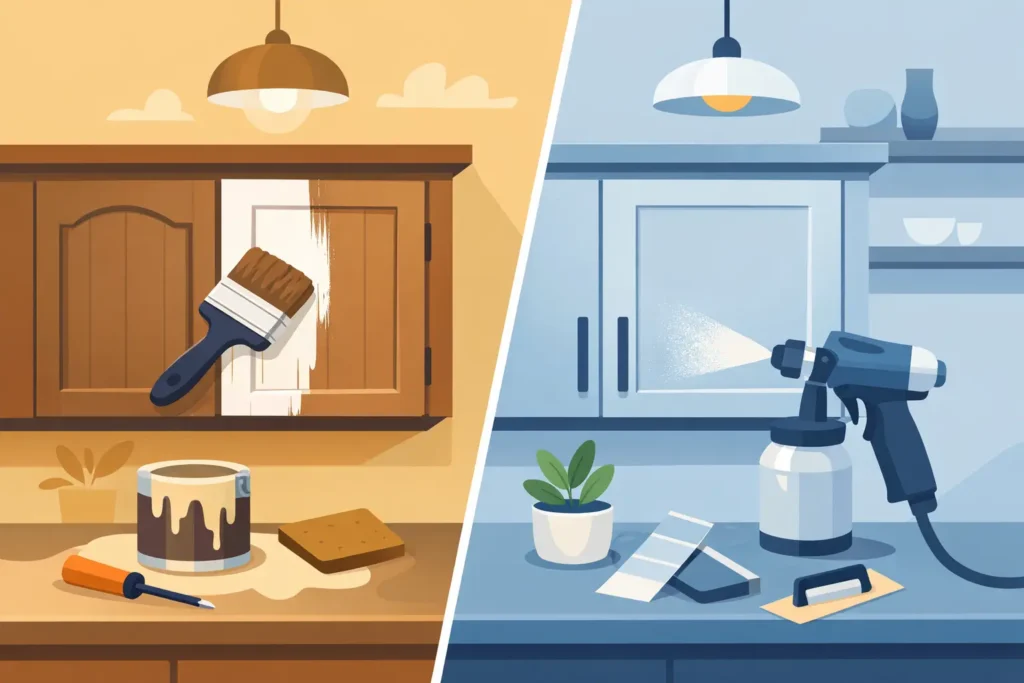
Old cabinets usually do not fail all at once. More often, the layout still works, the boxes are solid, and the doors still open fine – they just make the whole kitchen look tired. If you are wondering how to update old cabinets without committing to a full remodel, the good news is that replacement is not your only option. In many homes, the fastest and most affordable improvement comes from restoring what is already there.
That approach makes sense for homeowners who want a visible upgrade without demolition, high material costs, and weeks of disruption. Cabinets take up a lot of visual space in a kitchen, so even a targeted update can change the room quickly. The key is knowing which method fits the condition of your cabinets, your budget, and the finish you want.
Table of Contents
ToggleHow to update old cabinets by starting with the cabinet condition
Before choosing paint colors or new pulls, look at what you are actually working with. Some cabinets are simply dated. Others have grease buildup, chipped finishes, peeling laminate, water damage, or warped doors. Those details matter because the right update depends on whether the problem is cosmetic or structural.
If the cabinet boxes are sturdy and the doors are in decent shape, refinishing is often the smartest route. If hinges are loose, shelves sag, or a few drawer fronts are damaged, repairs can usually be handled before refinishing. But if the cabinets are swollen from moisture, badly cracked, or falling apart at the joints, replacement may be the better long-term investment.
This is where many homeowners save money by being selective. You do not need to replace cabinets just because they look old. If the bones are good, restoring the finish can deliver a cleaner, more current look at a fraction of the cost.
The fastest ways to update old cabinets
Some cabinet updates are mostly visual, while others improve both appearance and function. The best choice depends on how dramatic you want the change to be.
Paint can change the entire kitchen
Painting is one of the most common ways to refresh old cabinets, especially when the style is still serviceable but the color feels dated. Dark stained wood, orange-toned oak, yellowing white finishes, and faded coatings can all make a kitchen feel older than it is.
A painted finish can brighten the room, make it feel cleaner, and help older cabinets work with newer countertops, flooring, or backsplashes. White, warm greige, soft gray, and muted green remain popular because they feel current without being too trendy. That said, color should still match the fixed elements in the room. A cool gray may not work well next to warm granite, and a bright white can make older appliances look more worn.
Paint is effective, but the result depends heavily on preparation. Cabinets need proper cleaning, surface prep, and the right coating system. Without that, the finish can chip, peel, or show brush marks quickly. For homeowners who want a durable, smooth result, professional cabinet refinishing is often a better value than redoing a failed DIY project.
New hardware adds a quick, low-cost update
If your cabinet doors are in good condition, replacing knobs, pulls, and hinges can make a noticeable difference. Old brass hardware, mismatched handles, or worn-out hinges can date the entire kitchen. Swapping them for matte black, brushed nickel, or simple modern pulls gives cabinets a more updated look without changing the cabinet structure.
This works especially well when the existing finish still looks decent but lacks style. It is also a practical first step if you want a small improvement now and a full refinishing project later.
Refacing changes the exterior look
For some kitchens, refacing is worth considering. This usually involves replacing doors and drawer fronts while covering the visible cabinet boxes with a matching surface. It can create a more dramatic style change than paint alone, especially if you want to move from a raised-panel look to a shaker-style door.
The trade-off is cost. Refacing is typically more expensive than refinishing and less expensive than full replacement. It can make sense when the cabinet boxes are sound but the door style feels too outdated to save.
Refinishing keeps the cabinets and restores the finish
Refinishing is often the best middle ground for homeowners who want strong visual improvement without tearing out usable cabinets. It focuses on restoring and renewing the existing surfaces, whether that means changing the color, correcting wear, or giving cabinets a cleaner, more modern finish.
This option is especially effective for cabinets with scratches, fading, stains, minor chips, and years of everyday wear. It also fits the needs of homeowners who want a fast turnaround and less disruption than a full remodel. For many kitchens, professional refinishing delivers the look people want without the mess and cost they were trying to avoid in the first place.
What to fix before you refinish or paint
A new finish will not hide every problem. In fact, once the cabinets are cleaned and coated, flaws can stand out more if they were never corrected. That is why prep matters just as much as color selection.
Loose hinges should be tightened or replaced. Drawer slides that stick should be adjusted. Small dents, chips, and surface damage should be repaired before any new finish goes on. Grease buildup, especially around stove-side cabinets, needs to be fully removed so coatings can bond correctly.
If there is water damage under the sink or near the dishwasher, check whether the issue is active or old. A refinishing project can improve appearance, but it should not cover up a moisture problem that will keep getting worse.
When DIY makes sense and when it does not
Homeowners often ask whether they can handle cabinet updates themselves. The answer depends on the scope of the project and the finish standard you expect.
Changing hardware, adjusting hinges, adding under-cabinet lighting, or installing soft-close components are realistic DIY jobs for many people. Painting cabinets is possible too, but it is far more labor-intensive than it first appears. Cleaning, sanding, priming, curing time, dust control, and reassembly all affect the final result.
DIY may work if you have a small kitchen, patience, and reasonable expectations. But if you want a factory-smooth appearance, long-term durability, and minimal downtime, professional refinishing usually makes more sense. The cost is often lower than many homeowners expect, especially when compared with replacing cabinets or correcting a poor paint job later.
How to update old cabinets without replacing your layout
One of the biggest advantages of cabinet refinishing is that you do not need to change the entire kitchen to get a fresh result. If your layout is functional, keeping it can save a significant amount of money. Plumbing, countertops, flooring, and wall repairs often drive remodel costs up far beyond the cabinet price alone.
Updating the finish allows you to improve the room while avoiding that chain reaction. You keep the structure, reduce waste, and still get a kitchen that looks cleaner and more current. That is one reason refinishing is a practical option for families preparing to sell, homeowners updating a long-owned house, or anyone trying to improve the space without turning it into a major construction project.
For homeowners focused on value, this approach checks several important boxes. It is faster than replacement, more affordable than remodeling, and more eco-friendly because it keeps usable materials out of the landfill.
Choosing the right finish for long-term results
Not every cabinet finish performs the same way. Kitchens deal with heat, moisture, grease, hand contact, and frequent cleaning, so durability matters. A finish that looks good on day one but breaks down after a year is not much of an upgrade.
That is why surface preparation and product selection are so important. Professional refinishing systems are designed to hold up better under everyday use than generic wall paint or rushed weekend methods. The goal is not just a color change. It is a finish that looks refreshed and stays that way.
This is also where professional guidance helps. A homeowner may know they want lighter cabinets, but not whether a painted finish, stain update, or full refinishing process is best for their cabinet material and wear level. A qualified refinishing specialist can assess that quickly and recommend a solution based on condition, timeline, and budget.
At Bath Tub Reglazing Inc, that practical approach is the point. The goal is to restore beauty to existing surfaces with less cost, less disruption, and results homeowners can see right away.
If your cabinets are making the kitchen feel older than it is, replacement may be more than you need. A well-planned update can give the room a cleaner, more modern look while keeping the project manageable – and that is often the smartest improvement you can make.