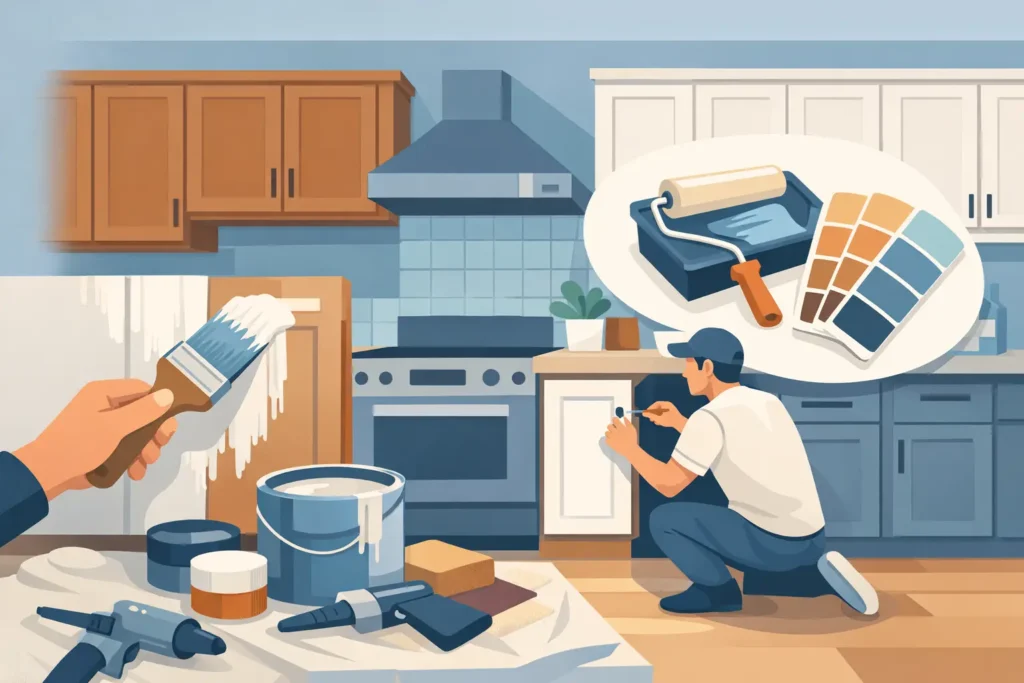
If your kitchen cabinets are scratched, faded, greasy, or stuck in another decade, replacement is not your only option. This kitchen cabinet refinishing guide is for homeowners who want a cleaner, newer look without the cost, mess, and downtime of tearing the whole kitchen apart.
Refinishing works best when the cabinet boxes and doors are still structurally sound. If your cabinets open and close properly, the layout still works, and the main issue is appearance, refinishing can be the smart middle ground between living with outdated cabinets and paying for a full remodel. It gives you visible improvement fast, and in many homes, that is exactly what matters most.
Table of Contents
ToggleWhat cabinet refinishing actually changes
Cabinet refinishing focuses on the surfaces you see every day. The process typically restores or updates cabinet doors, drawer fronts, and exposed frames so the kitchen looks cleaner, brighter, and more current. Depending on the condition and style of the cabinets, that may include deep cleaning, sanding, repairing minor damage, priming, and applying a new finish.
For many homeowners, the biggest benefit is practical: you keep the existing cabinet structure in place. That means no demolition, less disruption, and a much lower project cost than replacement. It also means less waste, which matters if you want to improve your home without sending usable materials to the landfill.
That said, refinishing is not a fix for every cabinet problem. If the wood is swollen from water damage, the boxes are pulling from the wall, or the layout no longer fits how you use the kitchen, replacement may be the better long-term choice. A good refinishing plan starts with an honest look at condition, not just color.
Is refinishing right for your kitchen?
The short answer is: it depends on what is bothering you. If you dislike the finish but the cabinets themselves still function well, refinishing is often a strong option. If you hate the door style, want taller cabinets, or need major storage changes, refinishing will not solve those design issues.
Cabinets that are good candidates usually have solid frames, stable doors, and only cosmetic wear such as stains, yellowing, chipped finish, surface scratches, or outdated color. Older wood cabinets are often excellent candidates because they were built well and just need surface restoration.
Laminates and thermofoil cabinets can be more complicated. Some can be restored or coated successfully, but adhesion and finish durability depend heavily on the material and its condition. This is one area where a professional assessment can save you from spending money on the wrong approach.
Kitchen cabinet refinishing guide: what the process looks like
Homeowners often expect refinishing to be just paint, but good results come from preparation. The finish is only as strong as the surface under it.
The first step is cleaning. Kitchen cabinets collect grease, cooking residue, and hand oils, especially around handles and near the stove. If that buildup is not removed completely, the new finish may not bond properly. After cleaning, hardware is removed and surfaces are evaluated for chips, dents, peeling areas, and other wear.
Next comes surface prep. Depending on the cabinet material and existing finish, this may include sanding, deglossing, filling minor defects, and smoothing damaged areas. The goal is to create a stable base so the new coating looks even and holds up under everyday use.
Then comes priming and finishing. Professional refinishing typically uses coatings designed for durability, moisture resistance, and a smooth cured finish. Homeowners often prefer white, off-white, gray, greige, navy, or black, but the right color depends on lighting, countertop tone, flooring, and how much contrast you want in the room.
Finally, the cabinets need proper curing time. They may look dry quickly, but that does not always mean the finish is ready for heavy use. Rushing this stage is one of the most common reasons DIY jobs get scuffed, sticky, or uneven.
DIY vs professional refinishing
A lot of homeowners start here, and for good reason. DIY cabinet painting videos make the process look simple. Sometimes it is manageable, especially in a small kitchen with basic flat-front doors and minimal wear. But cabinet refinishing is one of those projects where the difference between acceptable and excellent is usually in the prep and finish quality.
DIY can save money upfront, but it also brings risk. Brush marks, poor adhesion, drips, inconsistent sheen, and soft finishes are common when cabinets are cleaned or prepped incorrectly. Kitchens also get hard use. A finish that looks fine in week one can chip around handles and corners within months if the materials were not right.
Professional refinishing usually makes more sense when you want a durable finish, a cleaner application, and less downtime. It is especially helpful if your cabinets have visible wear, detailed profiles, older coatings, or surfaces that need repair before refinishing begins. For homeowners focused on results and convenience, hiring a specialist often provides better value than redoing a failed DIY project later.
What affects the final cost
Cabinet refinishing is more affordable than replacement, but pricing still varies. The biggest cost factors are kitchen size, number of doors and drawers, current cabinet condition, finish type, and how much prep or repair is needed.
Color changes can also affect labor. Going from a dark stained finish to a bright painted look often requires more preparation and product than refreshing cabinets with a similar tone. Decorative details, damage repair, and hardware changes can add time as well.
If you are comparing quotes, make sure you are comparing the same scope of work. One estimate may include cleaning, repairs, removal and reinstallation of doors, and full spray-applied finishing, while another may cover only a basic surface coat. Lower price does not always mean lower value, but it should come with clear expectations.
How to get the best result from cabinet refinishing
The best refinishing projects start with realistic goals. If you want your kitchen to feel newer, cleaner, and more updated, refinishing can deliver that in a big way. If you expect old cabinets with structural problems to perform like brand-new custom cabinetry, you may be disappointed.
Color selection matters more than many homeowners expect. A bright white can freshen a dark kitchen, but it can also highlight heavy wear in busy family spaces if maintenance is neglected. Mid-tone neutrals often hide fingerprints better. Dark finishes can look sharp and modern, but they tend to show dust and smudges more easily.
Hardware is another detail worth considering. Even if you are refinishing rather than remodeling, new knobs or pulls can change the look of the kitchen quickly. It is a small upgrade compared to replacement, but it can make the finished project feel more complete.
How long refinished cabinets last
When the work is done properly and the cabinets are cared for, refinished cabinets can last for years. Durability depends on the original cabinet condition, the products used, and how the kitchen is maintained.
Everyday care is simple. Use a soft cloth, mild cleaner, and avoid abrasive pads or harsh chemicals. Wipe up grease and moisture before they sit too long, especially near the sink, dishwasher, and stove. Slamming doors or dragging rings and keys across the finish will shorten its life, just as it would with new cabinets.
This is one reason refinishing appeals to practical homeowners. You are not just changing color. You are extending the useful life of cabinets you already own, often with less expense and less interruption than a replacement project.
When speed and convenience matter most
Many homeowners put off kitchen updates because they assume every improvement means weeks of mess and a budget that keeps growing. Cabinet refinishing is different. It is designed for people who want real visual change without turning the kitchen into a construction zone.
For busy households, that matters. You may not want demolition, contractor traffic for weeks, or the ripple effect that comes with full renovation. A focused refinishing project keeps the upgrade targeted: improve what looks worn, preserve what still works, and get the kitchen back to normal sooner.
That practical approach is exactly why so many homeowners choose refinishing services from specialists like Bath Tub Reglazing Inc. The goal is not to overcomplicate the project. It is to deliver a visible transformation that feels worth it.
If your cabinets are dated but still solid, refinishing may be the upgrade that makes your whole kitchen feel better to use every day.